
LUSTRINA JET · Family & pets
Flying with Pets on a Private Jet: A Practical Planning Guide
Flying with pets on a private jet requires an accepted animal, suitable cabin arrangements and valid documents for the complete route.
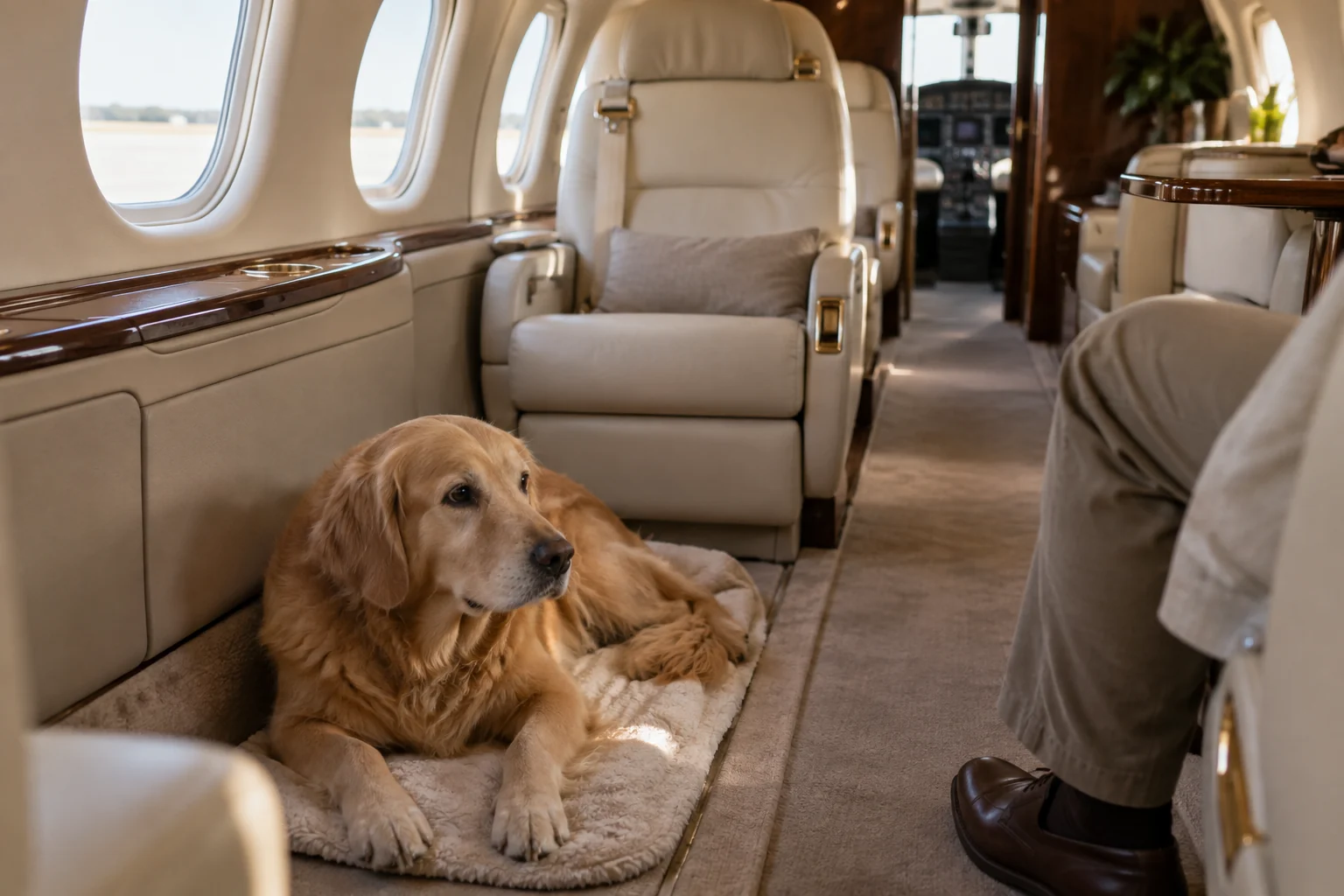
Keeping a dog or cat close to its owner can be a major reason to charter. But a private cabin does not remove border requirements, make every operator pet-friendly or guarantee that a large carrier will fit. Plan the animal’s journey alongside the passengers’ journey from the beginning.
The most effective order is to establish the route and document position, find an operator and aircraft that accept the animal, agree the cabin setup and charges, then prepare for travel. Choosing a beautiful aircraft first and introducing the pet later often reverses that order at the least convenient moment.
Three separate approvals must work together
Think of the journey as three checks. First, may the animal enter the destination under the relevant rules? Second, will the operator and, where relevant, aircraft owner accept it? Third, can the particular aircraft accommodate it appropriately with the passengers and their luggage?
Passing one check does not resolve the other two. A valid pet passport does not require an aircraft owner to accept a dog. An operator’s agreement does not waive a national entry rule. A spacious cabin photograph does not establish a safe location for a large carrier.
Keep the confirmations separate in your planning. This makes it easier to identify what is still missing and which checks to repeat if the itinerary or aircraft changes. It also stops travellers interpreting a general phrase such as “pets welcome” as complete travel approval.
Describe the animal before the aircraft search
Give the species, breed, approximate weight, age and number of animals. Include the external dimensions of each carrier you intend to use. Explain any relevant behaviour, mobility limitation or handling need honestly. “Small and well behaved” does not tell an operator enough to assess the arrangement.
For a dog, say whether it is comfortable in a carrier, whether it can settle beside the owner and whether it has travelled before. For a cat, explain the intended carrier arrangement and whether it is used to remaining inside. Do not describe either animal as guaranteed to stay calm in an unfamiliar environment.
If several animals are travelling, identify them individually. Their combined weight alone is not enough. Separate carriers, relationships between the animals and the amount of usable floor space can influence the aircraft choice.
Send the passenger and luggage details at the same time. A cabin that works for one owner and a dog may not work for six passengers, several suitcases and the same dog. Our baggage guide helps you assemble the complete loading information.
Check the route before committing to the aircraft
Document requirements depend on the countries involved, the species, the purpose of the movement and who accompanies the animal. The outward and return journeys may require different preparation. Check documents again for each trip instead of treating a previous acceptance as permanent permission.
Common document questions include identification, rabies vaccination, the correct travel certificate or passport and any destination-specific treatment. Some origins or circumstances can add tests, waiting periods or import permissions. Use the current requirements of the competent authorities and a veterinarian able to advise on the route.
Start this work early. An available aircraft tomorrow cannot shorten a mandatory waiting period. If the document position is uncertain, clarify it before accepting charter terms that could make cancellation expensive.
Also check the intended arrival airport and any required entry arrangements. A geographically convenient airport is not automatically suitable for every regulated animal movement. If the operator plans a technical stop, establish whether it introduces further requirements instead of treating it as an irrelevant detail.
For travel involving Great Britain and the EU, use our dedicated route guide. It separates the two directions and explains why current rules, residence and the carrier’s approval matter.
Understand the operator’s pet policy
Ask for acceptance of the actual animal on the actual aircraft. Policies may depend on the owner’s instructions, cabin materials, the next flight, cleaning time and the proposed arrangement. Two aircraft of the same model can therefore have different answers.
Ask whether the operator requires a carrier or another approved restraint, when to use it and where to place the animal. Ask whether the pet may use a seat and what protection the operator requires. Do not assume a photograph of a pet on a jet seat describes the rules of your flight.
The commander and crew retain responsibility for safety. An animal must not obstruct the aisle, exits or crew access. If the animal does not fit the operator’s accepted arrangement, discuss a larger cabin or a different plan.
Where owner approval remains outstanding, include the pet details in that request. General permission to charter the aircraft does not cover an animal you have never mentioned.
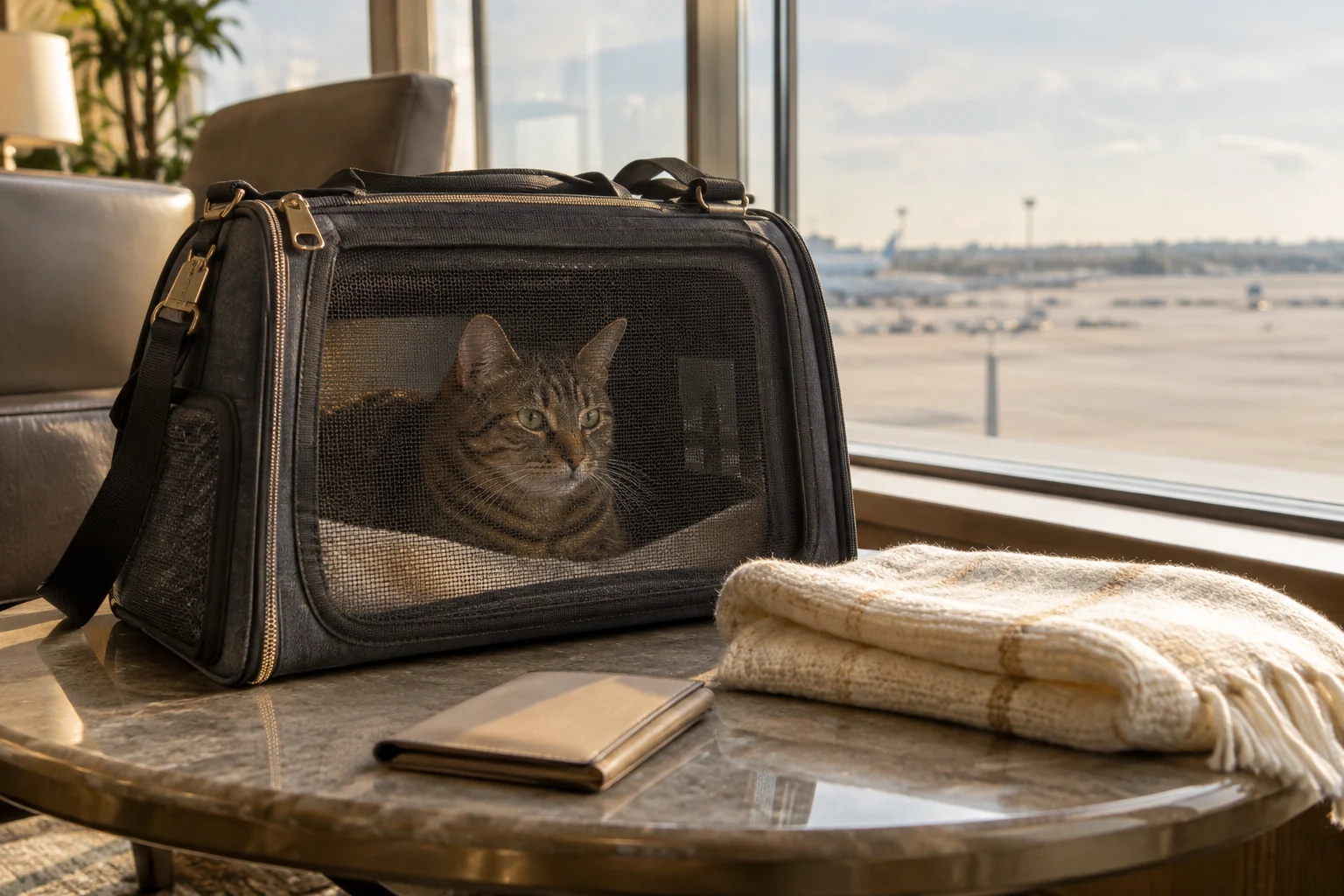
Choose usable space, not just a bigger category
The aircraft decision should consider the animal’s position, the owner’s seat, the carrier, boarding access and the remaining aisle. A large cabin is not automatically better if the layout leaves an awkward space for the required carrier or the operator does not accept the animal.
Ask the operator to describe the proposed arrangement clearly. Where will the crew secure the carrier? Can the owner remain nearby? Does the placement interfere with another passenger’s access? Does the agreed handling method cover boarding?
For a large dog, usable floor area can matter more than the published passenger count. For a cat, a quiet position for a secure carrier may be the priority. For several animals, separate spaces can be more useful than one visually impressive open area.
You can use the aircraft catalogue and cabin comparison to understand model differences. Final acceptance must still come from the operator for the specific flight. The comparison tool is a planning aid, not approval for an animal to occupy a particular position.
Measure the carrier and the doorway
Use the carrier’s external dimensions, including handles, wheels and protruding fittings. Internal dimensions matter for the animal’s comfort, but they do not tell the operator whether the carrier can pass through the aircraft door or fit in its accepted location.
Ask about the loading route as well as the final space. An object may fit on paper yet be difficult to turn through the entrance. Explain whether you can disassemble the carrier, while recognising that dismantling it may not be practical with the animal inside.
The animal should already be familiar with the carrier before travel. Introducing an unfamiliar enclosure at the terminal adds another change to a day that already includes a car journey, new people and aircraft noise. Discuss welfare concerns and any health-related preparation with your veterinarian.
Do not buy equipment solely because a generic online description calls it “airline approved”. Acceptance depends on its suitability for your animal and the planned operation. Have the operator confirm the actual product or specifications you intend to use.
Large dogs and multiple pets need a complete plan
An operator may accept a large dog in a private cabin, but the decision involves more than whether it can stand beside a seat. The operator needs an arrangement that remains workable during boarding, taxi, take-off, landing and unexpected movement in flight.
Discuss how the dog will board and where the owner will be. If lifting may be necessary, establish who can do it and whether the proposed method is appropriate. Do not assume that airport staff or crew are able to lift a heavy or anxious animal without prior discussion.
With several pets, give individual sizes and carrier details and explain whether they travel comfortably together. You may need more space to keep them separate. The number of animals can also affect which regulatory framework applies, so ask the competent authority to assess the complete group instead of dividing it informally to avoid the question.
State clearly if the journey involves a sale, rehoming or transfer of ownership. The rules for an owner travelling with a household pet may not cover a commercial or other regulated movement. The purpose of the journey matters independently of the fact that the aircraft is privately chartered.
Keep cats secure throughout the ground journey
For many cats, the main planning issue is containment and a familiar carrier. A terminal, open aircraft door and busy apron create places where an escape would be difficult to manage. Agree with the operator when, if ever, you may open the carrier.
Plan the transfer vehicle and handover so the carrier remains secure. Put the animal’s name and the travelling owner’s contact details on a suitable identification label without displaying unnecessary personal information. Keep documents with the responsible traveller.
Inside the cabin, do not assume the cat should be released because the space is private. Follow the accepted arrangement and the crew’s instructions. A cat hiding behind furniture can create a problem at landing even when the flight itself has been quiet.
If you have concerns about anxiety, illness or medication, consult the veterinarian before the trip. Do not improvise sedation as a last-minute boarding solution; a broker should not prescribe it.
Ask what the pet-related price includes
There is no single pet fee that applies across the charter market. A proposal may include routine cleaning, list a separate charge or leave particular costs subject to the operator’s terms. Ask which treatment applies to your flight.
Separate ordinary cleaning from exceptional cleaning and physical damage. A fixed pet charge does not necessarily cap liability for scratched upholstery or another documented loss. Read the relevant clause instead of assuming the fee is a comprehensive insurance payment.
Useful questions include who supplies protection, whether the charge is per flight or animal, what the operator may invoice after inspection and what evidence supports extra costs. The purpose is to understand the arrangement before travelling, not to assume damage will occur.
Review these points alongside the charter agreement. If two aircraft accept your pet, compare the complete offers, including cabin suitability and the conditions attached to the lower total.
Build a document and responsibility file
Keep a simple record of the route, each animal’s identity, the document requirements checked, the responsible veterinarian and outstanding actions. Store copies for coordination, but establish which originals must travel with the animal.
Assign one person to collect updates. If the owner, assistant, veterinarian and broker each work from a different version of the itinerary, they can miss an appointment or deadline. A changed arrival date should trigger a review of time-sensitive documents and treatments.
Check that identifying details agree across documents. If something looks inconsistent, ask the issuing professional or competent authority to resolve it. Do not alter veterinary records yourself or assume officials will ignore the discrepancy because the flight is private.
The broker can coordinate operational information and help identify questions. The owner remains responsible for providing accurate information and arranging valid documents, while the relevant authorities and professionals determine compliance within their roles.
Prepare the animal without inventing medical rules
Keep preparation familiar and practical. Assemble the accepted carrier or restraint, protective materials, cleaning supplies, water arrangements and any essential items discussed with the operator. Decide what should remain accessible during the flight.
Ask the veterinarian about health concerns specific to the animal, including recent illness, breathing difficulties, age or mobility. Avoid applying one owner’s feeding or medication routine to another animal. The right preparation depends on health, journey length and circumstances.
Plan a suitable opportunity for a dog to relieve itself before entering the controlled boarding process, using an area permitted by the terminal. Do not assume there will be an unrestricted walk beside the aircraft. Keep leads and carriers ready for the transfer between vehicle, terminal and cabin.
Pack enough essential supplies for a reasonable delay and know who will advise if the animal becomes unwell. A private charter is passenger transport, not a substitute for veterinary care. If the animal is not fit to travel, changing the schedule may be the appropriate decision.
Coordinate the terminal and the arrival transfer
Ask which terminal to use, when to arrive and where any required animal checks will take place. The operator and handler should know that a pet is travelling. A quiet terminal experience still needs to accommodate the applicable procedures.
Confirm that the transfer car accepts the animal and has room for the carrier, passengers and luggage. A vehicle suitable for the passenger group alone may not be suitable once the pet equipment is added. Agree any protection or restraint requirements with the transfer provider.
At arrival, allow for the required checks before assuming you can leave immediately. Plan the next part of the journey, including accommodation, rather than treating touchdown as the end of the animal’s travel needs.
When the group includes young children, combine the pet plan with the family travel checklist. Separate responsibilities for the child, animal and documents can make boarding easier without leaving anyone to improvise.
What if the aircraft or timing changes?
A replacement aircraft needs fresh pet acceptance. The same model name does not establish the same owner policy, cabin arrangement or available equipment. Send the animal and carrier details again and reconfirm material fees and conditions.
If the destination or arrival time changes, review the entry arrangements and time-sensitive paperwork. An operationally convenient alternative airport may not have the required pet-entry process. A delay can also affect a treatment window or document validity.
Ask what the alternatives mean for the animal as well as the passengers. A longer journey, additional stop or extended ground wait may change the practical suitability of the plan. The waiting and delays guide explains why schedule flexibility has limits.
For a journey that depends on a particular approved route, a deeply discounted empty leg deserves especially careful consideration. Its availability and schedule must work with the animal’s requirements; the label does not remove them.
A useful pet enquiry
Imagine two adults travelling with a medium-sized dog and a cat. A useful request lists the complete route and dates, each animal’s breed and weight, the two carriers’ dimensions, the passenger luggage and whether the owner accompanies them throughout. It also states the current document position and any relevant behaviour or health concern.
That information allows the search to focus on workable aircraft. By contrast, “two passengers, pets allowed?” postpones almost every important decision. The resulting first price may be for an aircraft that cannot accept the actual arrangement.
This is an illustrative briefing example, not a promise that a particular combination will be accepted. The operator and route checks still decide the outcome. Its value is that the right questions are asked before a deposit or fixed travel plan creates pressure.
Compare two workable plans
Once you have established basic eligibility, there may still be more than one sensible itinerary. Compare what the animal actually experiences: time in the transfer vehicle, time in the terminal, boarding, flight duration, possible stops and the drive after landing.
A nonstop flight from a slightly more distant departure airport may reduce handling compared with a closer airport followed by a technical stop. In another case, the longer drive may be unsuitable for the animal. The answer depends on the pet and the complete journey, rather than a universal preference for the shortest airborne sector.
Ask which aspects of each plan the operator has confirmed and which remain assumptions. One operator may explicitly accept the carrier while another still needs a layout check. At the destination, an arrival check may be ready for one proposed time but still need coordination for another. Put those differences beside the total price.
For a nervous animal, discuss the options with the veterinarian using the actual timings. “Private jet” is a description of the transport, not a clinical assessment of whether a particular itinerary is appropriate. A simpler ground journey or a different travel date may matter more than upgrading the cabin.
Prepare for the return before leaving
Keep the return requirements in the same travel file as the outward documents. Identify any veterinary appointment needed while away and check how it fits the planned arrival window. If the return remains flexible, understand which steps you will need to repeat or reschedule once you fix the date.
Keep the carrier, protective materials and original documents available throughout the stay. Do not send them home separately with other luggage. A return using another operator requires its own acceptance even when the outward flight was straightforward.
The final pet-flight checklist
- The route, purpose of travel and accompanying person are clear.
- You have checked current entry requirements for the animal and both directions.
- The specific operator and aircraft have accepted the pet.
- You and the operator agree on carrier dimensions, placement and boarding arrangements.
- You understand the cleaning, protection and possible damage conditions.
- Required documents and time-sensitive steps are complete.
- The terminal, transfer provider and arrival team have the same plan.
- A change of aircraft or itinerary will trigger the relevant checks again.
The best pet-friendly flight is one that works for the actual animal from departure address to destination. To begin, send Lustrina your route and the details of every travelling pet, or review our pet charter service.
Continue reading
Large Dogs on Private Jets: Space, Boarding and Operator Approval
Large dogs on private jets require individual acceptance, a workable cabin position and a boarding plan, even when an operator welcomes pets.
4 min read
Taking a Cat on a Private Jet: Carrier and Journey Planning
Taking a cat on a private jet requires an accepted carrier arrangement, secure transfers and valid route documents, alongside the operator’s approval.
5 min readFlying with Pets Between Great Britain and the EU by Private Jet
Private pet flights between Great Britain and the EU need direction-specific documents, suitable entry arrangements and approval for the actual aircraft.
7 min read