
LUSTRINA JET · Family & pets
Taking a Cat on a Private Jet: Carrier and Journey Planning
Taking a cat on a private jet requires an accepted carrier arrangement, secure transfers and valid route documents, alongside the operator’s approval.
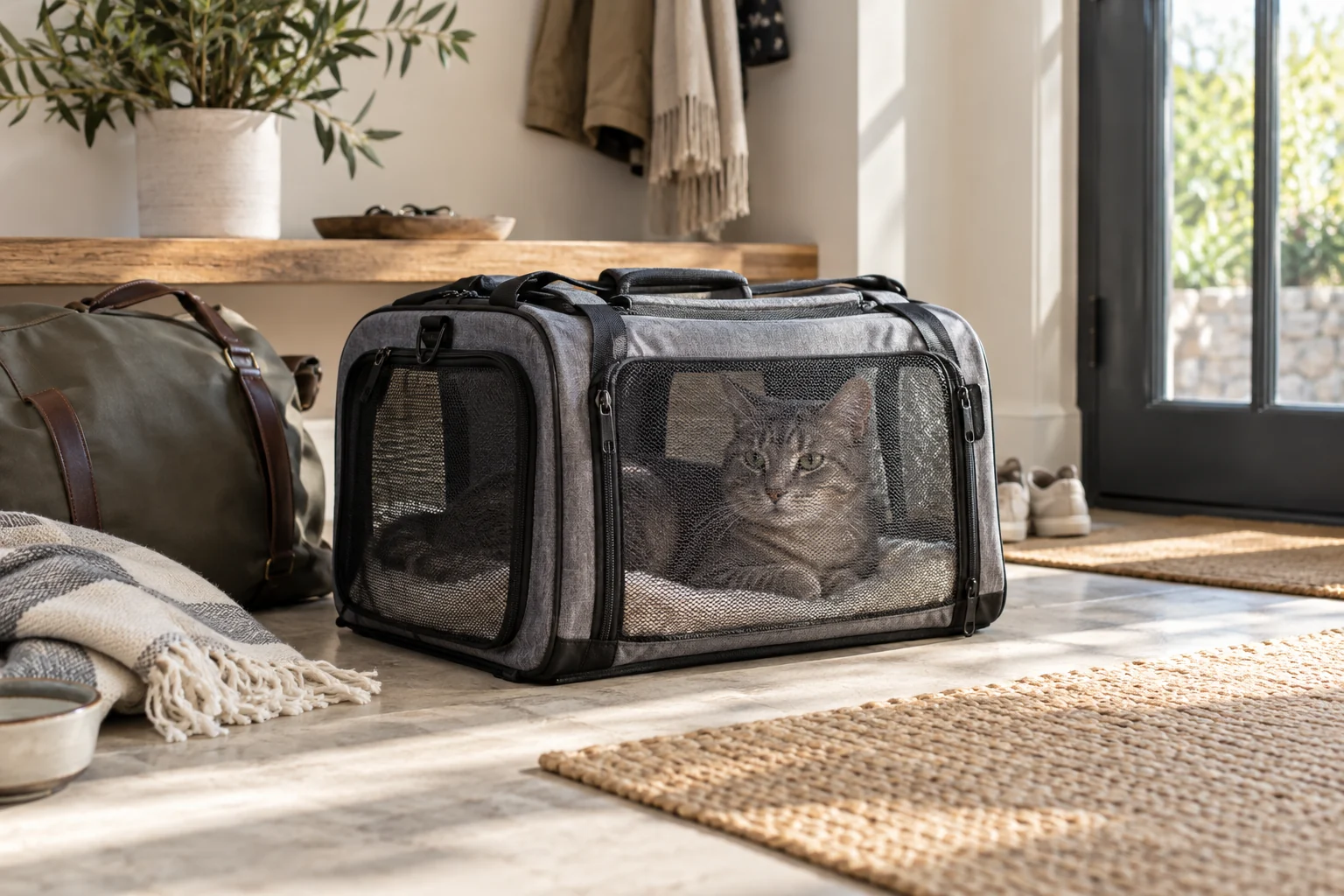
A private cabin gives the owner more control over the travelling group, but it does not make unfamiliar surroundings harmless. For a cat, the most useful planning often concerns the moments between the house, vehicle, terminal and aircraft.
Start with the carrier you will actually use
Choose equipment appropriate for the cat and ask the operator to approve the intended product or specifications. Give its external dimensions, including handles and other fittings. The carrier needs to suit the animal and fit through the aircraft entrance into the accepted position.
A generic “airline approved” label cannot confirm acceptance on every private aircraft. Discuss how the carrier will be secured and whether the operator requires a particular arrangement during different phases of the flight.
Check closures and the carrier’s condition before travel. For several cats, agree the number of carriers and individual arrangements rather than assuming that animals which live together should share a travel enclosure. See the main pet guide for the broader aircraft and route checks.
Make preparation familiar
Allow time for the cat to become familiar with the carrier before the departure day. A sudden introduction to an unfamiliar enclosure adds another change to an already unusual journey. Use your veterinarian’s advice if the cat has a history of distress, illness or difficulty travelling.
Keep preparation specific to the animal. Do not adopt another owner’s medication or feeding instructions. A broker can coordinate the journey but should not decide what a cat should receive medically.
Pack familiar, suitable materials and the practical supplies agreed with the operator. Consider what you would need during a delay as well as the planned flight. Keep those items accessible instead of placing everything in the main luggage compartment.
Plan every transfer with containment in mind
Decide who is responsible for the cat at each stage. One person can supervise the carrier while another handles documents or other luggage. This is particularly useful when children or several animals travel together.
Keep the carrier secure in the vehicle and throughout the agreed ground process. If a check requires opening it, ask the responsible staff where and how that will happen safely. Do not open it casually in a busy lounge, beside a vehicle or on the apron.
A carrier is not a convenient container for additional loose items. Keep documents, phones and other objects separately so you do not need to disturb the animal whenever someone asks for paperwork. The FBO guide explains the ground briefing to obtain.
Agree what happens inside the cabin
Ask the operator where the carrier will remain and whether opening it is ever permitted. A private cabin is not automatically an appropriate space for a cat to roam. Furniture, doors and equipment create places where an animal could hide or obstruct access.
Follow the accepted arrangement and crew instructions. The owner’s wish to comfort the cat does not override the need to keep the animal and cabin secure. If the proposed position does not work for the cat or owner, address that before selecting the aircraft.
For a household travelling with a dog, consider the animals individually. A workable position for a large dog does not establish an equally suitable carrier location for a cat.
Confirm documents for the complete route
Check identification, vaccination and the appropriate travel document with a veterinarian or competent authority familiar with the itinerary. Requirements depend on the countries involved, the purpose of movement and the person accompanying the animal.
Do not assume a previous trip proves that the same document remains sufficient. The return journey and a planned stop can introduce separate questions. If someone other than the owner travels with the cat, explain the arrangement rather than leaving it hidden inside the passenger booking.
For travel between Great Britain and the EU, use the dedicated entry guide. Keep originals available and copies organised for coordination.
Arrange the car and accommodation
Tell the transfer provider that a cat in a carrier is travelling and confirm suitable space. Do the same for the arrival vehicle. A carrier squeezed into an unsuitable location is not a good conclusion to a carefully planned flight.
Confirm the accommodation’s pet acceptance and practical arrival arrangements. If you arrive before the room is available, establish where the cat can remain safely with its owner. An early touchdown does not automatically mean immediate access to a quiet room.
For a longer stay, keep the carrier and original documents available for the return. Do not send them home separately with other luggage.
Review changes before accepting them
If the aircraft changes, reconfirm the carrier’s fit and location. If the route changes, revisit documents and ground arrangements. A technical stop deserves particular attention if it introduces disembarkation or a new transit question.
A useful final check covers the carrier, responsible person, terminal, documents, cabin position, charges and arrival transfer. That gives the journey a clear structure without promising that any cat will find flying effortless.
Continue reading
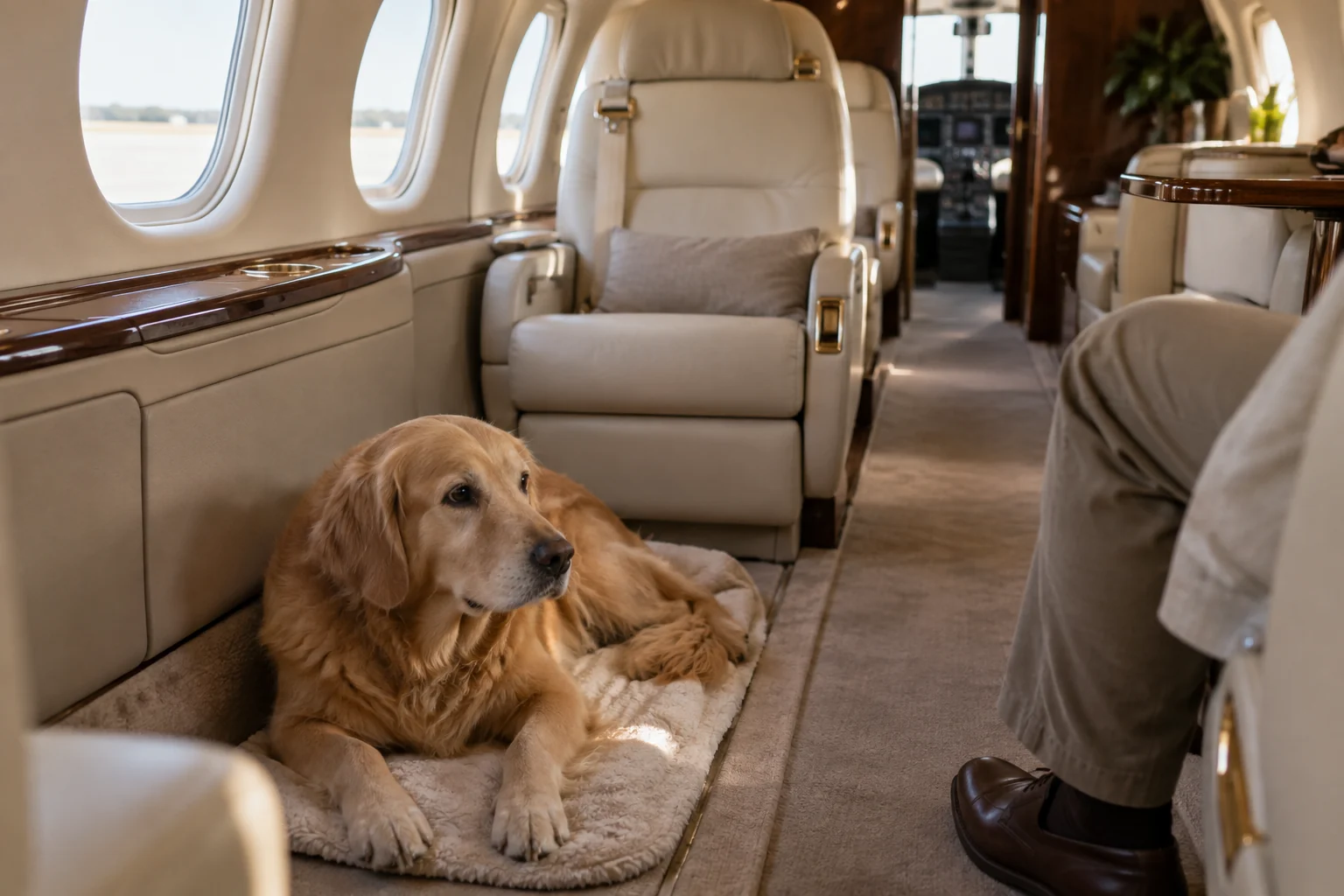
Flying with Pets on a Private Jet: A Practical Planning Guide
Flying with pets on a private jet requires an accepted animal, suitable cabin arrangements and valid documents for the complete route.
15 min read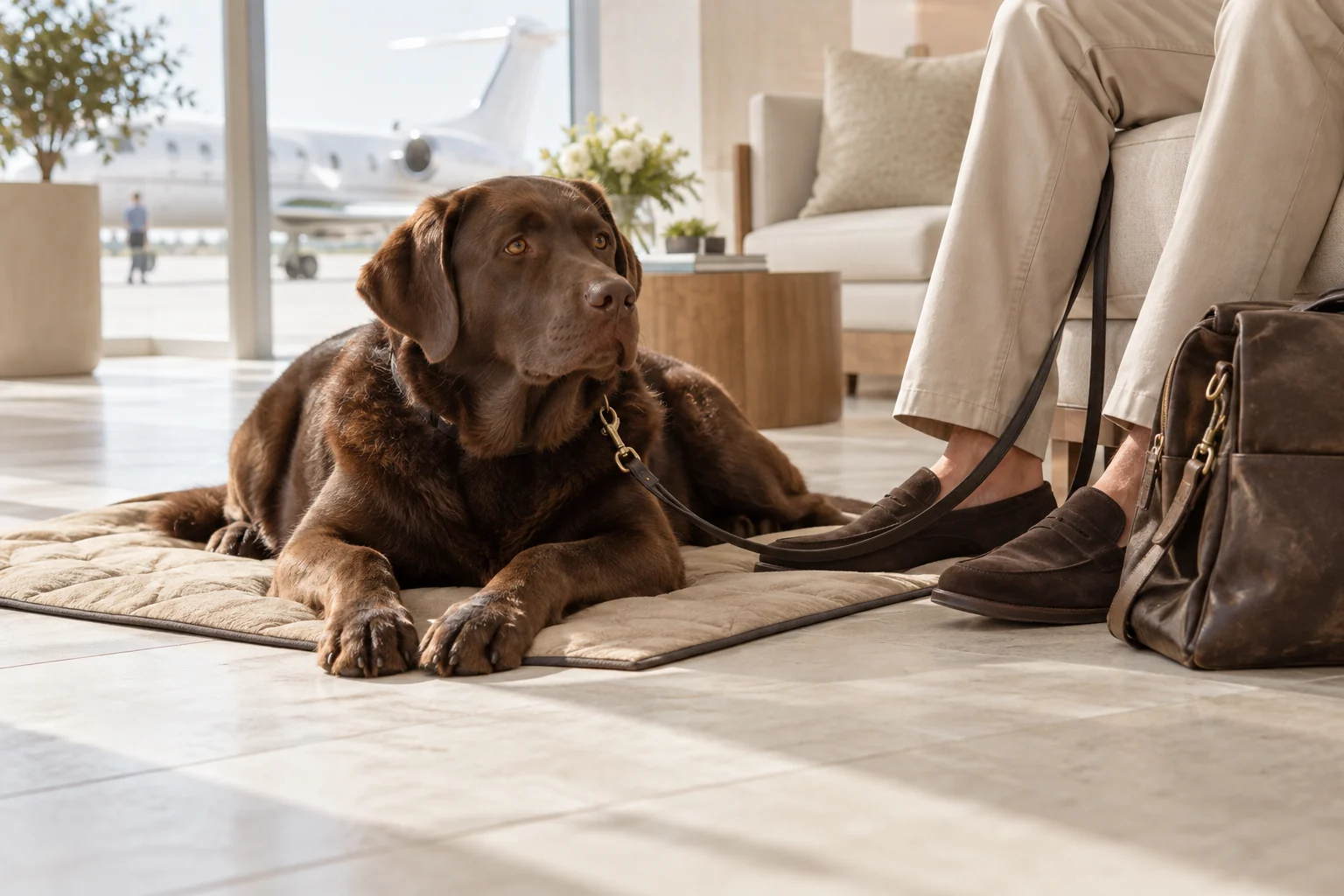
Large Dogs on Private Jets: Space, Boarding and Operator Approval
Large dogs on private jets require individual acceptance, a workable cabin position and a boarding plan, even when an operator welcomes pets.
4 min read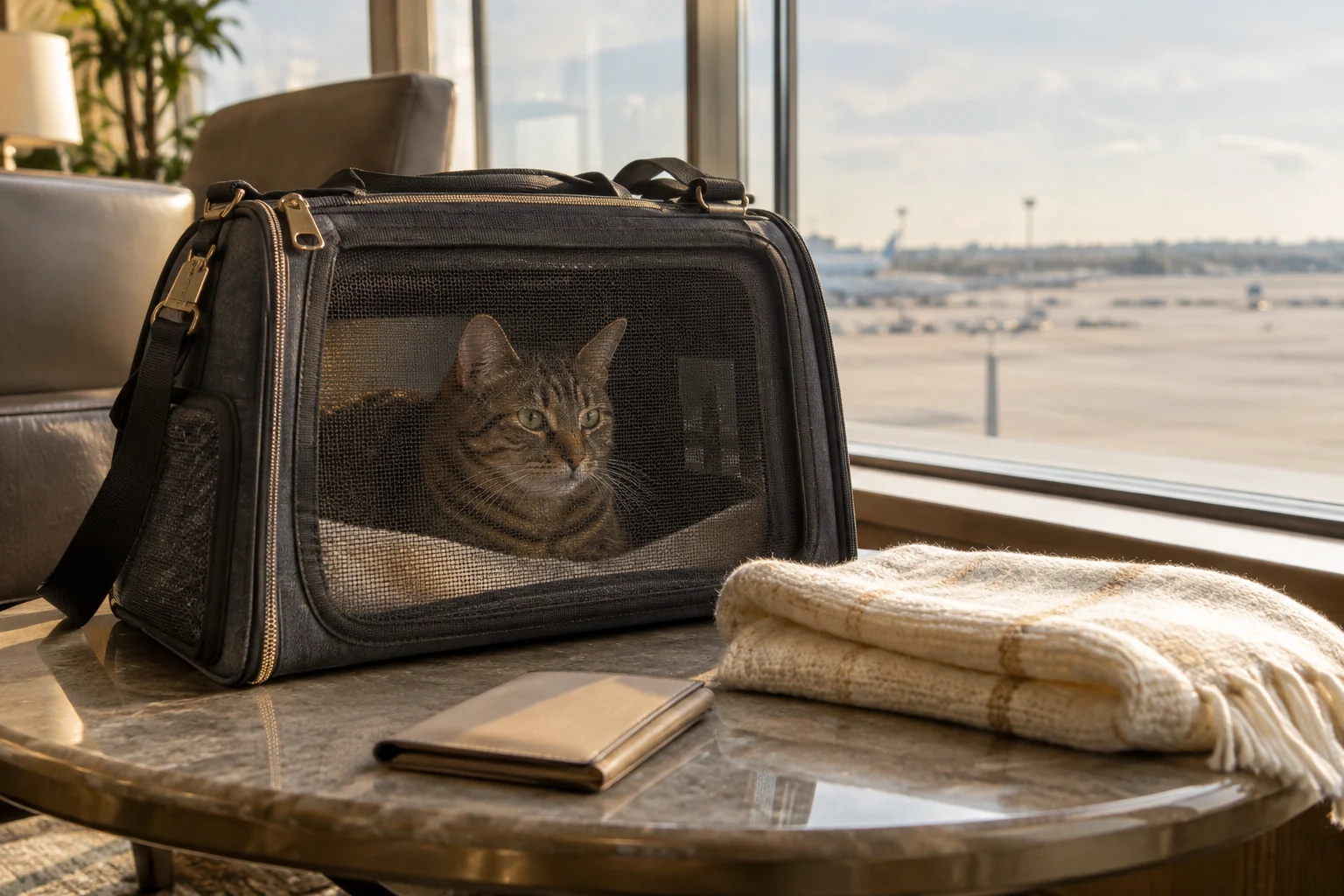
Flying with Pets Between Great Britain and the EU by Private Jet
Private pet flights between Great Britain and the EU need direction-specific documents, suitable entry arrangements and approval for the actual aircraft.
7 min read