
LUSTRINA JET · Family & pets
Flying with Children on a Private Jet: What to Arrange Before Booking
Flying with children on a private jet requires advance agreement on seating, restraints, luggage, documents and the practical needs of each child.
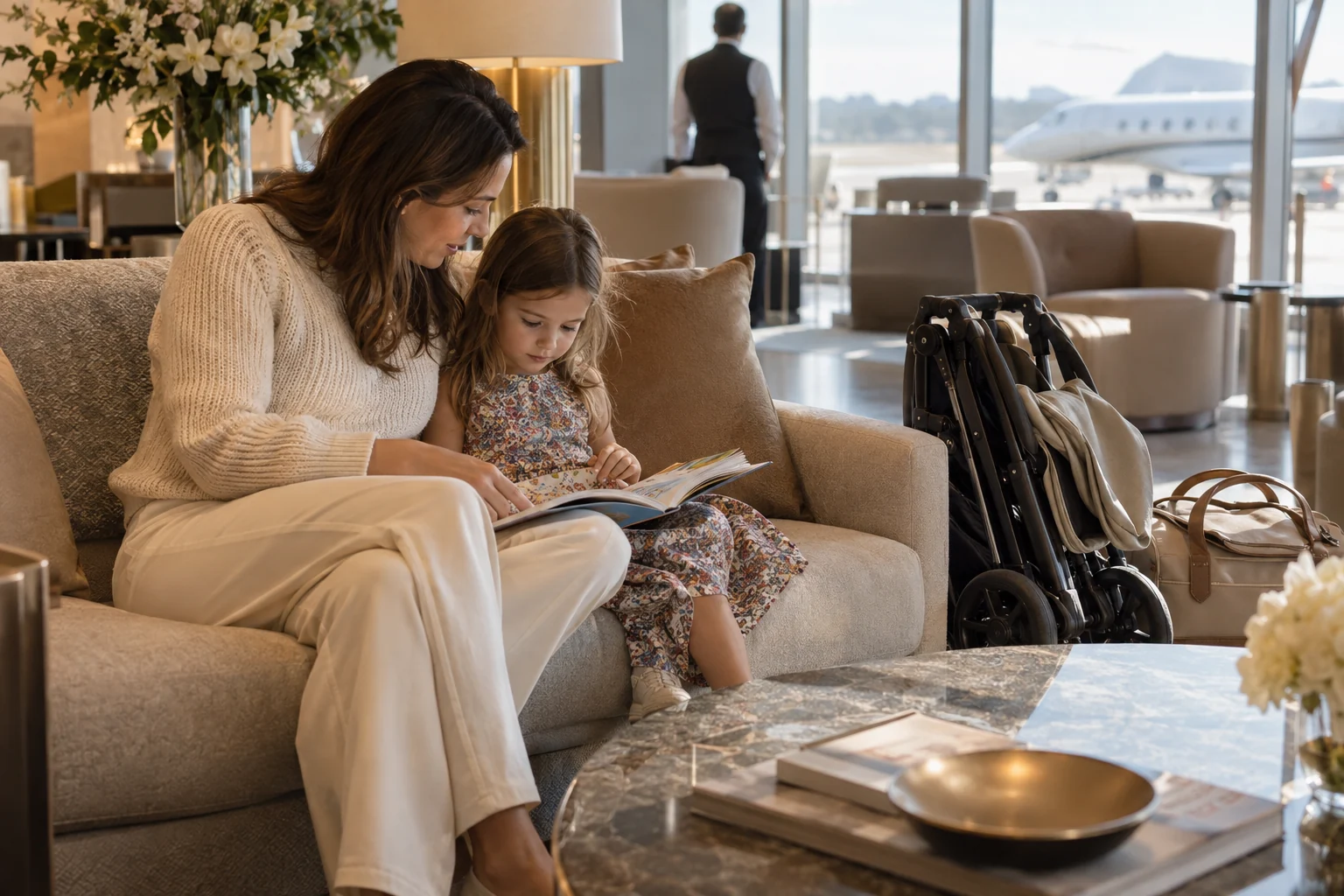
A private cabin gives the family more control over the journey. It does not make every seating arrangement safe or every piece of equipment compatible. The most useful preparation happens before selecting the aircraft, when there is still time to choose a cabin that works for both adults and children.
Give ages, not just a passenger total
Include every child and infant in the request and provide their ages on the travel date. Explain who is travelling with them and whether any child needs assistance during boarding or the flight. A request for “four passengers” leaves important questions unanswered if two are infants.
The operator needs to determine the permitted seating and restraint arrangement for the actual aircraft. Do not infer the number of children who can travel with one adult from another family’s trip. Applicable rules, equipment and operator procedures need to be checked.
Start with the full booking guide if you are arranging your first charter. Add the family details to the initial brief rather than as a note after the aircraft has been chosen.
Have the exact child seat checked
EASA recommends approved child seats for young travellers. Approval for aircraft use is only part of the assessment: the seat also has to fit and be correctly secured in the proposed aircraft seat. The operator must confirm compatibility and placement.
Send the manufacturer, model, approval label and dimensions. Include the installation instructions and bring them on the flight. A restraint that depends only on ISOFIX connections cannot simply be attached with an aircraft lap belt unless that installation method is approved for it.
Private jet cabins may contain forward-facing, rear-facing or side-facing seating. Do not decide where to put the child seat from a cabin photograph. Ask which position has been accepted and where the accompanying adult will sit. Avoid promising a particular seat to a child before that arrangement is confirmed.
A sofa or a bed is not automatically a child restraint
Sleeping comfort and the required seating arrangement are separate questions. A wide divan, a converted bed or a parent’s preferred holding position should not be assumed suitable for taxi, take-off, landing or turbulence.
If a bassinet is important, ask whether the particular aircraft has an approved installation and when it may be used. Do not assume the aircraft provides one because a large airline did on a previous trip. A portable product brought from home does not become approved aircraft equipment simply because it fits in the cabin.
Discuss likely sleep needs when comparing aircraft, then follow the crew’s instructions during the flight. A child who is resting may still need to move into the agreed restraint arrangement when required.
Look at the cabin as a parent
Consider the aisle, step at the entrance, access to the lavatory and the distance between the child’s seat and the accompanying adult. On a longer flight, the ability to help a child without disturbing every other passenger may matter more than a decorative feature.
Ask about lavatory privacy and practical space for changing a baby. Do not assume a dedicated changing table is installed. Also confirm whether a cabin attendant is included. The availability of a private aircraft does not automatically include a person able to provide continuous cabin service or childcare.
Use aircraft comparison to understand broad cabin differences. Confirm the family-specific arrangement against the actual aircraft, particularly if the proposal changes before departure.
Count the stroller and all the small bags
Family luggage expands through small items: a stroller, car seat, changing bag, toys, food and an extra bag added at the last moment. Put them on one list with the suitcases. A compact cabin does not gain storage simply because some passengers are small.
Send folded stroller dimensions and identify removable pieces. Agree whether it can be used until boarding and how it will be returned after arrival. If the child seat is used on board, its placement still needs confirmation; if it is carried as baggage, its size still counts.
Our baggage guide explains what to measure. Keep the items needed during the flight in a bag that can be stored accessibly in an approved location.
Plan food around the actual facilities
Give clear requests for familiar food, portion size and any allergies. Ask what can be stored, prepared or heated on the proposed aircraft. A galley photograph does not establish the equipment or service available on that flight.
For an allergy, describe the requirement precisely and ask what the caterer and operator can confirm. Do not assume that a private cabin guarantees an allergen-free environment. Any essential medical plan should be discussed with the child’s clinician, with relevant equipment or assistance needs passed to the operator.
For babies, agree the practical handling of feeding supplies and water before departure. Pack enough essentials for a reasonable delay. The aim is to avoid depending on a particular item being available in a small terminal or on board.
Check documents and consent for the route
Children need the appropriate travel documents and entry permissions for their nationality and route. Additional consent or evidence of relationship may be relevant when travelling with one parent, relatives or another accompanying adult. Requirements vary by jurisdiction and family circumstances.
Do not assume that a shared surname resolves every question or that a private terminal bypasses checks. For a UK departure, for example, parental responsibility and any relevant court arrangements matter. Obtain route-specific guidance early if the situation is not straightforward.
If a child will travel without a parent or guardian, ask whether the operator accepts the arrangement and what conditions apply. An ordinary charter booking is not automatically an unaccompanied-minor service. Identify the responsible adults at departure, on board and at arrival.
Choose a workable schedule
A departure near a child’s normal sleep time may be convenient, but build the plan around the complete journey, including the drive, terminal and arrival transfer. A very late flight can be less useful if the destination airport or ground arrangements are restrictive.
Tell the organiser if the schedule needs a realistic range rather than one exact time. Read can a private jet wait? before assuming that a difficult morning can always be solved by delaying departure indefinitely.
On the day, prepare children for the parts that may feel unfamiliar: aircraft noise, steps, wearing a restraint and following the crew’s instructions. A favourite book or familiar quiet activity can be more useful than planning elaborate entertainment around unconfirmed onboard equipment.
The family briefing before confirmation
- Ages and the complete number of passengers.
- Confirmed seating and any accepted child restraint.
- Stroller, luggage and access to essentials.
- Food requests, allergies and relevant assistance needs.
- Documents and any required consent.
- Terminal address, reporting time and transfers with suitable child seating.
If the aircraft changes, recheck the requirements that depend on its cabin. For a family travelling with a pet as well, combine this list with the pet planning guide. Send Lustrina the complete family brief so the aircraft search starts with the people who will use it.
Continue reading
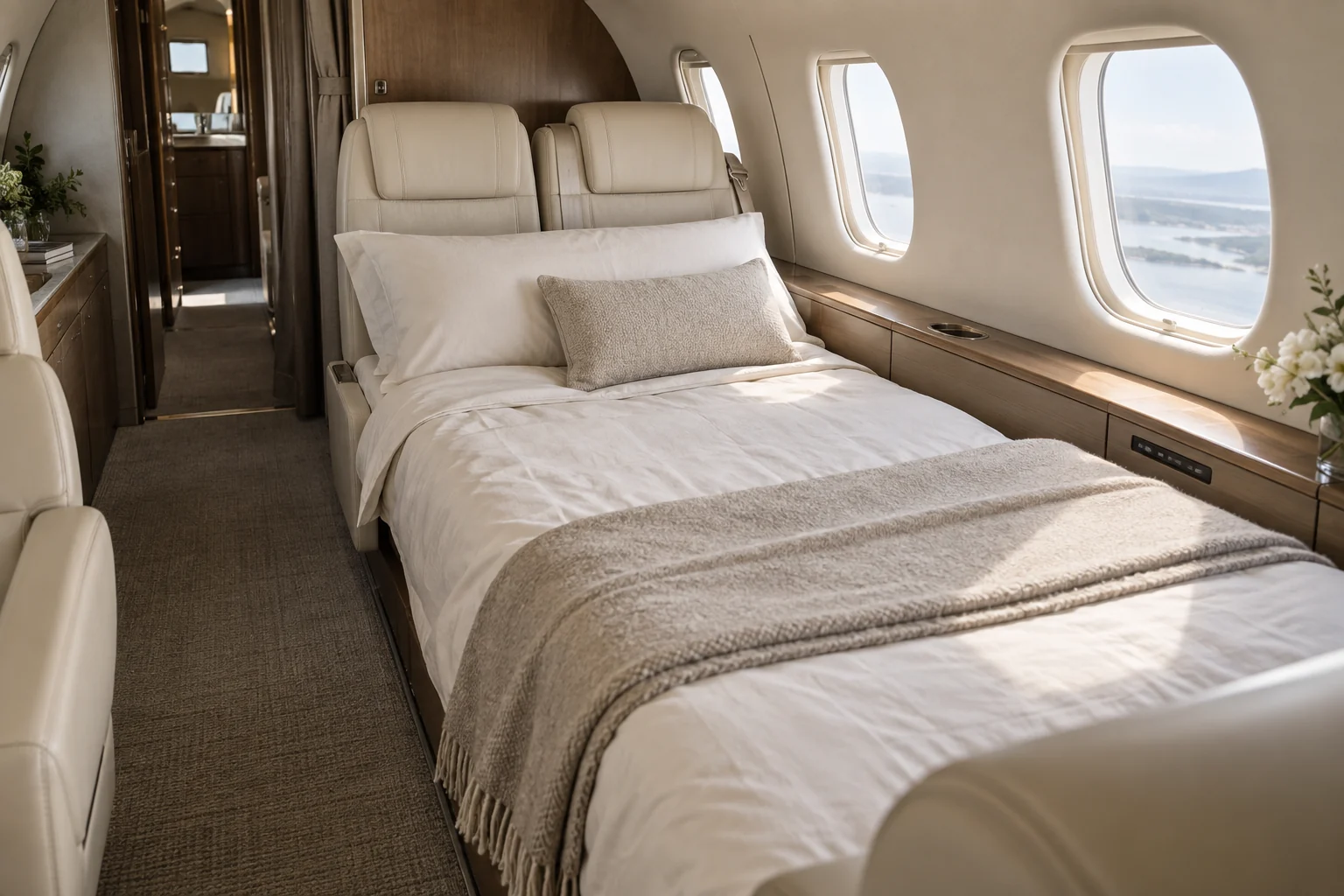
Sleeping on a Private Jet: Seats, Berths and Cabin Layout
Sleeping on a private jet depends on the actual berth arrangement, usable dimensions and flight schedule, not simply the aircraft’s passenger capacity.
4 min read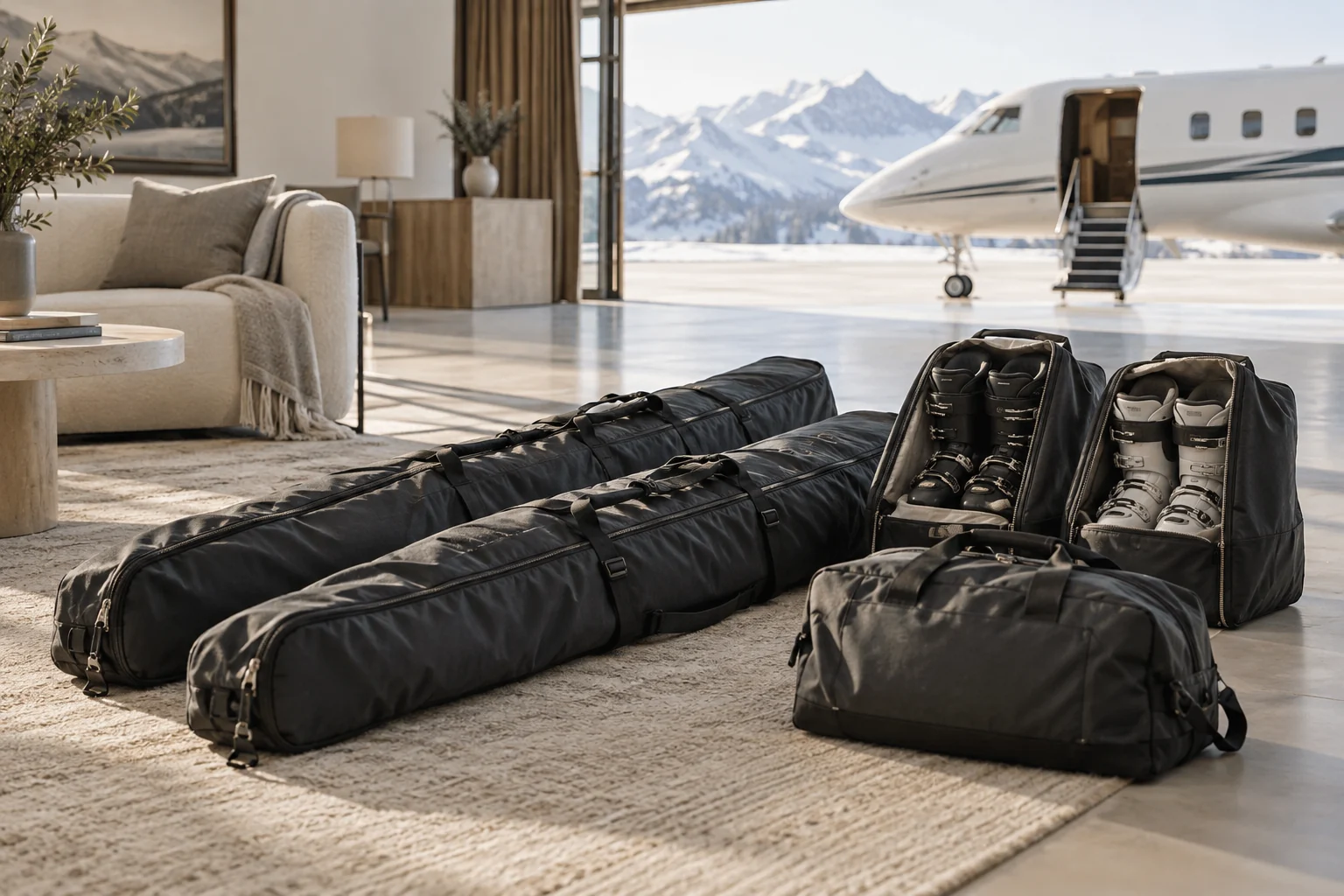
Ski Equipment on a Private Jet: Bags, Boots and Airport Transfers
Ski equipment on a private jet needs a loading check based on packed length, weight and shape, alongside the group’s remaining luggage.
5 min read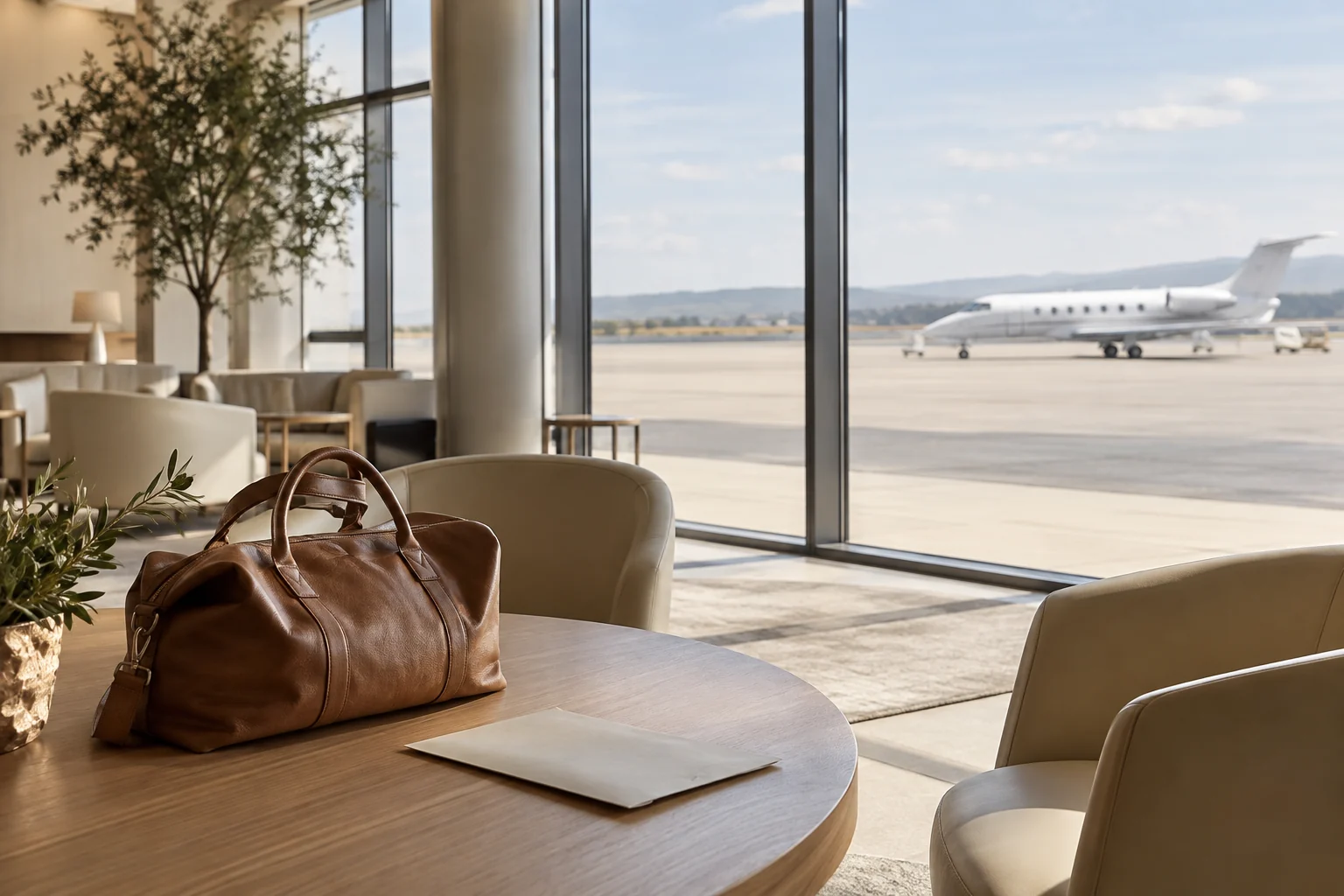
Booking a Private Jet: From First Enquiry to Departure
Booking a private jet means agreeing an aircraft, itinerary, price and charter terms, then completing passenger and operational checks.
15 min read