
LUSTRINA JET · Aircraft & comfort
Private Jet Baggage: What Fits, What Doesn’t and What to Measure
Private jet baggage depends on compartment shape, loading openings, weight and the flight’s payload, not simply the number of passenger seats.
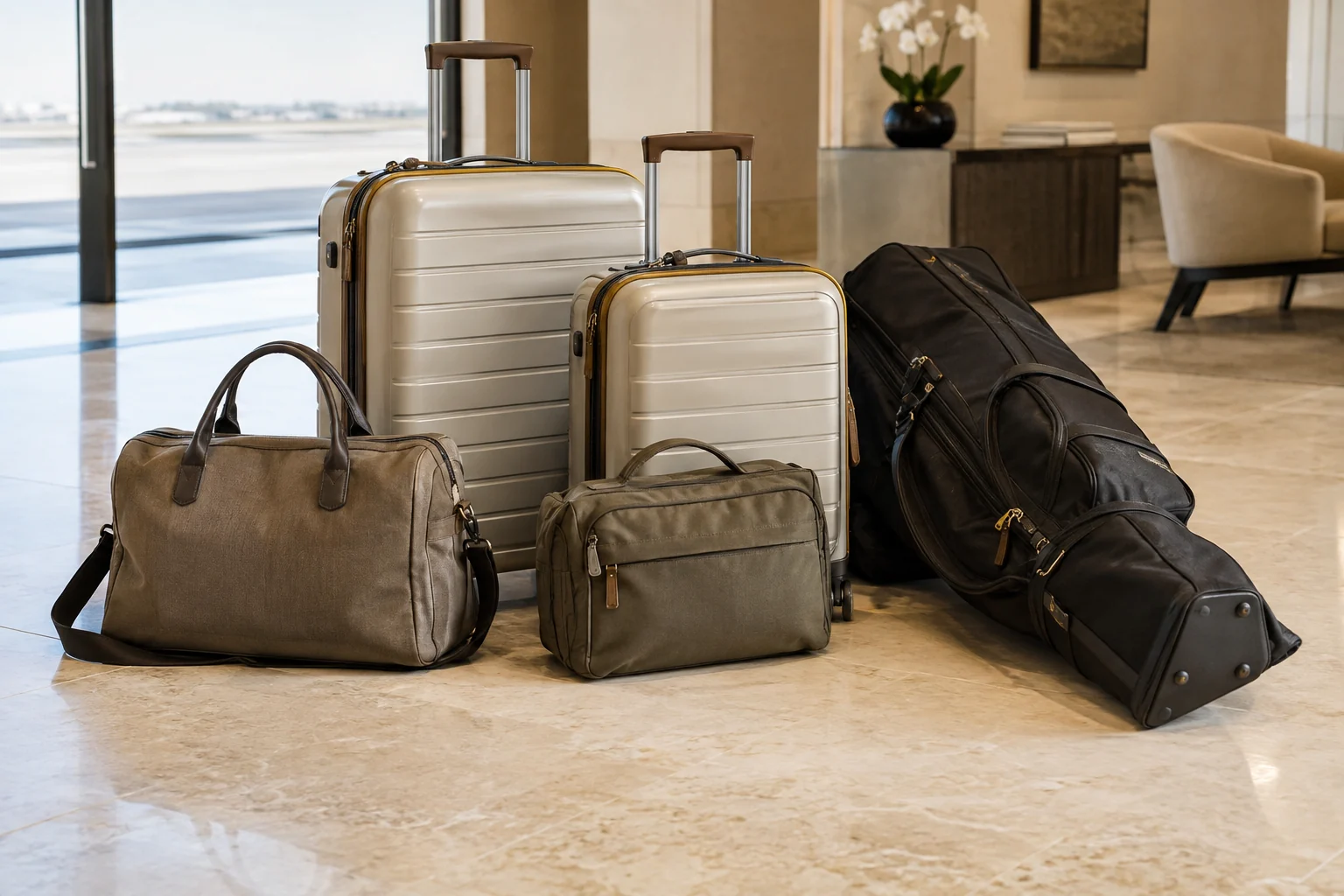
An aircraft can have enough seats for your group and still be unsuitable for the things you want to take. The answer is rarely a useful universal allowance of one case per person. Give the operator an actual luggage list, especially for family holidays, ski trips and equipment-heavy travel.
Volume is only the first number
A published baggage volume describes space, but not every litre is equally usable. Compartments can be curved, tapered or divided. A rigid case may not fit through the opening even when its volume appears comfortably within the total.
Loading angle matters too. A long item might pass through a door but have insufficient space to turn into position. For unusual equipment, photographs and external dimensions are more useful than a description such as “standard sports bag”.
Use the aircraft catalogue to compare broad capabilities. The final check should concern the proposed aircraft, the actual bags and the route. Do not convert a brochure volume into a guaranteed suitcase count without confirmation.
Measure the luggage as it will travel
Measure length, width and height including wheels, fixed handles, pockets and protective packaging. Weigh bags after packing. If a soft bag can compress, explain that, but do not assume the operator can rely on squeezing it around other items.
Count every piece, including cabin bags, laptop cases, shopping bags and equipment added by another passenger. A list of four large suitcases that omits six smaller items can produce a misleading assessment.
For an awkward object, provide a clear photograph beside a tape measure and state which orientation is acceptable. Fragile items may not tolerate being laid flat or stacked. Discuss handling requirements before the loading team meets the object at the aircraft.
Hard cases and soft bags behave differently
Soft bags can make better use of irregular spaces, provided they are suitable for their contents and can be secured. Hard-shell cases protect some items well, but their fixed shape can leave unused gaps or make the loading opening decisive.
This does not mean every passenger should abandon a hard case. It means the choice of luggage can expand or reduce the aircraft options. If a preferred aircraft is borderline, ask whether repacking into a specified number of smaller bags would solve the problem.
Do not rely on placing the surplus on empty passenger seats. Cabin storage must comply with the aircraft’s approved arrangements and the crew’s instructions. A seat that is free for a passenger is not automatically approved for an unsecured suitcase.
Weight can change the route
The relevant loading calculation includes passengers, baggage, fuel and other operational factors. A model’s maximum payload and maximum range should not be read as figures that are always available simultaneously.
An aircraft might accommodate the physical luggage but require a different fuel plan for the intended route. Conditions at the airports can also affect performance. Only the operator can assess the actual flight, so avoid interpreting a model comparison as a dispatch calculation.
If the proposal includes a technical stop, ask whether the passenger and baggage load is part of the reason. The quote comparison guide explains how a stop affects the assessment of otherwise similar offers.
Ski bags, golf clubs and strollers
Long items need their own dimensions. Give the length of the packed ski or golf travel case, not just the equipment inside it. Several slim-looking bags can use more space than expected once handles and protective ends are included.
For a stroller, provide folded dimensions and explain whether it separates into several pieces. State whether you need it until boarding and immediately after arrival, so the ground team can plan handling. Do the same for mobility aids, with any battery details raised separately.
If equipment belongs to several passengers, collect one complete list. “Everyone is bringing golf clubs” should become a number of travel cases and their dimensions before the aircraft is confirmed.
| Item | Information to send |
|---|---|
| Suitcases | Number, external dimensions and packed weight |
| Ski or golf cases | Full packed length, width, depth and number |
| Stroller | Folded dimensions, detachable parts and handling needs |
| Pet carrier | External dimensions, animal details and intended cabin use |
| Fragile equipment | Packaging, orientation and handling restrictions |
Check access and conditions in the compartment
Some baggage compartments cannot be accessed during flight. Temperature control and pressurisation also vary by aircraft and compartment. Do not assume that the conditions match the passenger cabin.
Keep essential medication, documents and items needed during the flight in an approved accessible place. Ask about temperature-sensitive equipment or supplies in advance. A statement that an aircraft “has a baggage compartment” does not resolve these questions.
Pets require an agreed cabin arrangement rather than being treated as ordinary luggage. The pet travel guide explains acceptance, carriers and usable space. Families should also coordinate bags and strollers with the seating decisions in flying with children.
Declare batteries and unusual contents
Private charter still has dangerous-goods requirements. Tell the operator about spare lithium batteries, power banks, battery-powered mobility equipment and other items that may need specific handling or approval. Give the battery rating and device details when requested.
Do not move a restricted item into a different bag to avoid the question. Rules can depend on battery type, capacity, condition and whether it is installed in equipment. The operator should provide the applicable instructions for the flight.
The same principle applies to sporting weapons, ammunition, chemicals and specialist equipment. A private cabin does not make an undeclared item acceptable. Arrange the required checks before travel rather than seeking an exception during boarding.
Confirm again if the aircraft changes
Baggage acceptance for one aircraft should not be assumed to transfer to a replacement. Even within a model family, individual arrangements and payload conditions can differ. Send the original baggage list with the substitution request and obtain a fresh confirmation.
If there is a mismatch, practical options may include repacking, selecting another aircraft or arranging separate transport where suitable. Review timing, cost and handling before choosing. Leaving the decision until the group is beside the aircraft creates the fewest options.
A useful luggage message
Instead of “four passengers with normal luggage”, send: “Four passengers, four cases measuring 70 × 45 × 28 cm including wheels, two soft bags measuring 45 × 30 × 25 cm, and one folded stroller. Packed weights and a photograph of the stroller are attached.” These dimensions are an example, not an aircraft allowance.
For a new trip, send Lustrina the route and luggage list. A few measurements before booking are more useful than a surprise at the baggage door.
Continue reading
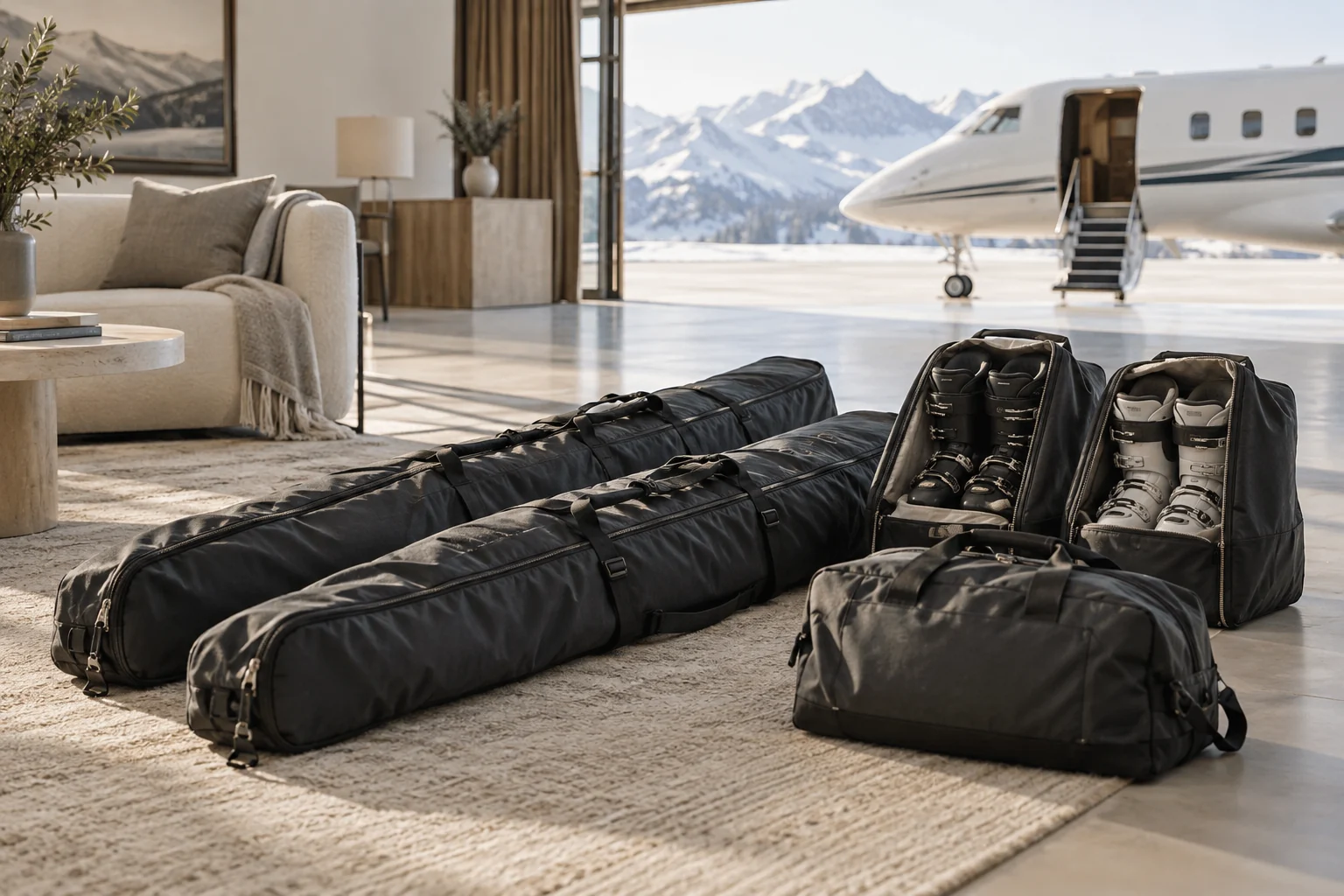
Ski Equipment on a Private Jet: Bags, Boots and Airport Transfers
Ski equipment on a private jet needs a loading check based on packed length, weight and shape, alongside the group’s remaining luggage.
5 min read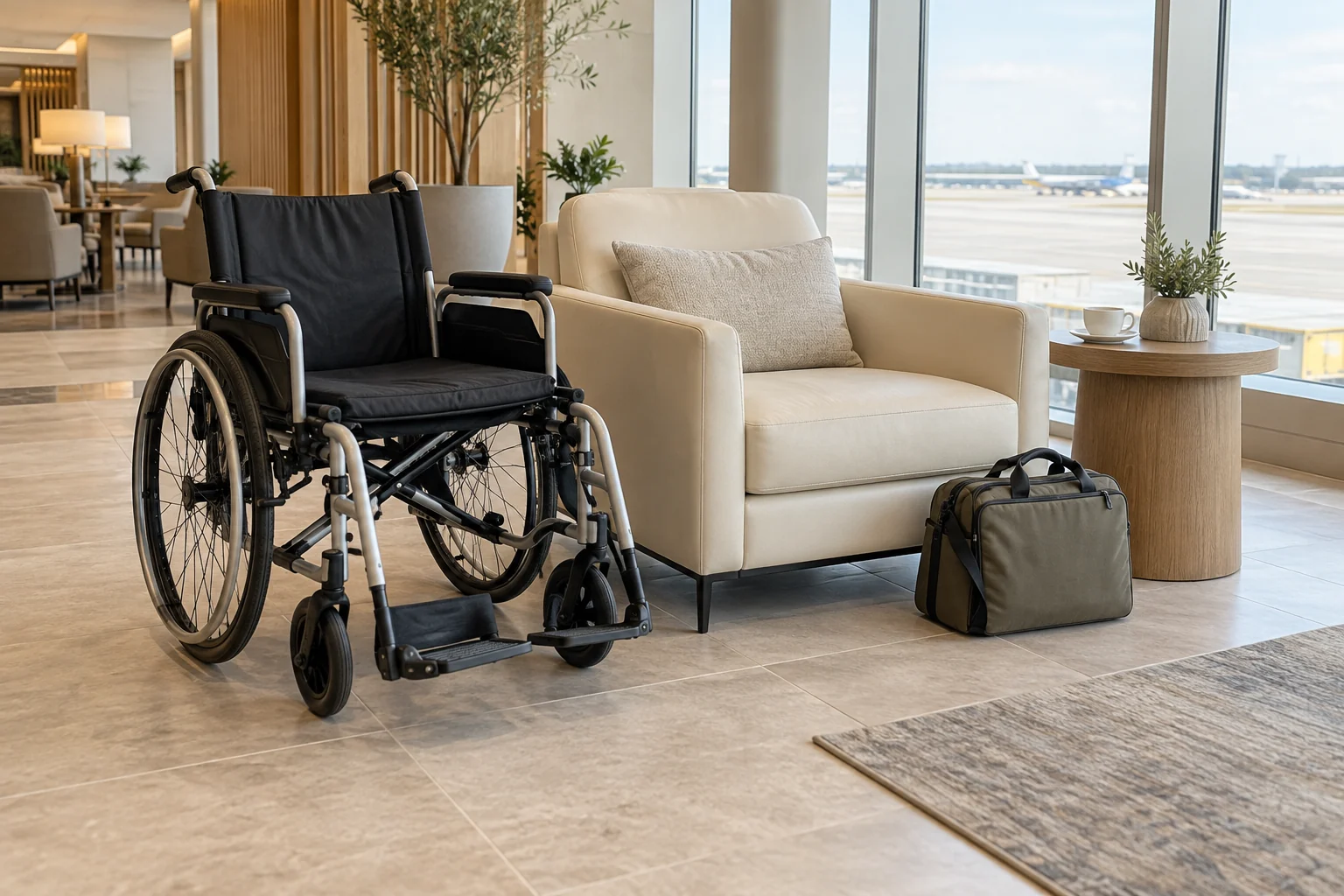
Private Jet Mobility Assistance: From the Car to the Cabin Seat
Private jet mobility assistance needs a complete boarding, seating and equipment plan; a spacious cabin alone does not establish accessible travel.
5 min read
Booking a Private Jet: From First Enquiry to Departure
Booking a private jet means agreeing an aircraft, itinerary, price and charter terms, then completing passenger and operational checks.
15 min read