
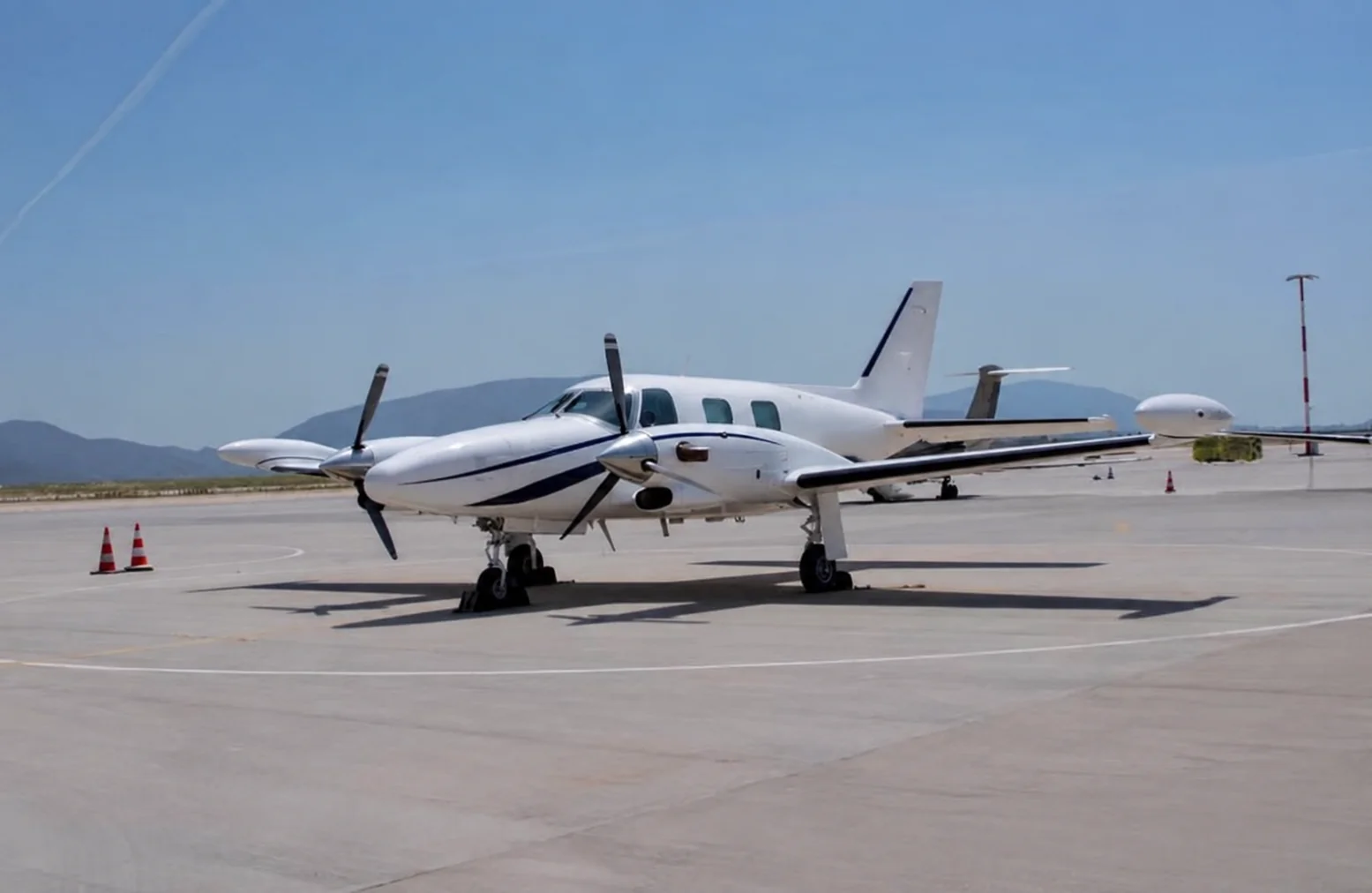
Piper Cheyenne II
The Cheyenne II combines turboprop speed with a compact pressurised cabin. It is best considered for a small party whose luggage fits the limited front and rear compartments.
Piper Cheyenne II: a closer look at the cabin

Example interior. However, colours, seating and equipment vary by aircraft.

Why consider this model?
How much space?


People and cabin dimensions share one scale. The cabin outline is illustrative. Likewise, the layout is an example rather than the seat map of the aircraft in your quote.
Piper Cheyenne II: room for your luggage
1.18 m³ of baggage space.
* Indicative estimate based on published baggage volume, for medium suitcases around 65 × 45 × 25 cm. Compartment shape, door openings, baggage weight and flight load can reduce the number. We confirm your luggage for the aircraft offered.
Skis, golf bags or extra luggage?
Include the number and dimensions of bulky items in your request. In particular, long items need a separate check.
Piper Cheyenne II: aircraft specifications
Planning figure; passenger load, wind, reserves and airfield conditions affect the route.
Piper Cheyenne II model family
Piper Cheyenne II
Piper developed the Cheyenne from the pressurised Navajo, with deliveries beginning in 1974. The original model was renamed Cheyenne II when the lower-powered Cheyenne I appeared.
Model historyWhere it began and how it evolved
Piper’s pressurised Navajo supplied the starting point for a move from piston engines to turboprops. The Cheyenne kept a compact business cabin but offered a different level of climb and cruise performance. Its later Roman numerals identify several developments, so the II should be placed within that family rather than treated as a generic Cheyenne.
Piper developed the Cheyenne from the pressurised Navajo, with deliveries beginning in 1974. The original model was renamed Cheyenne II when the lower-powered Cheyenne I appeared.
The later IIXL had a longer cabin and is a separate variant. Engine upgrades are also common on surviving aircraft and can change cruise performance.
Before you choose
Can I stand upright in the cabin?
The cabin is lower than 180 cm, so a person of that height cannot stand fully upright. For comparison, the scaled illustration shows the difference. Maximum cabin height: 1.31 m.
Will my aircraft have this exact interior?
Not necessarily. These photographs and the layout illustrate the model. Therefore, we check the actual interior, seats and equipment when preparing your proposal.
When should I consider this model?
The Cheyenne II combines turboprop speed with a compact pressurised cabin. It is best considered for a small party whose luggage fits the limited front and rear compartments.
Check this aircraft for your flight
Aircraft comparison
Compare cabin space, range and aircraft specifications side by side.
2 or 3 models · Any category


Piper Cheyenne II: preparing your request
First, send your route, dates and passenger count. Then add the number of bags and dimensions of larger items. For example, skis or a pushchair may need a separate loading check. Also, mention pets and any cabin equipment you need. If your departure time is flexible, give the acceptable window. Finally, compare the offered aircraft’s layout with your group’s needs before confirming.
Let’s discuss your journey
Contact us to discuss your route and flight details.