
LUSTRINA JET · Aircraft & comfort
Ski Equipment on a Private Jet: Bags, Boots and Airport Transfers
Ski equipment on a private jet needs a loading check based on packed length, weight and shape, alongside the group’s remaining luggage.
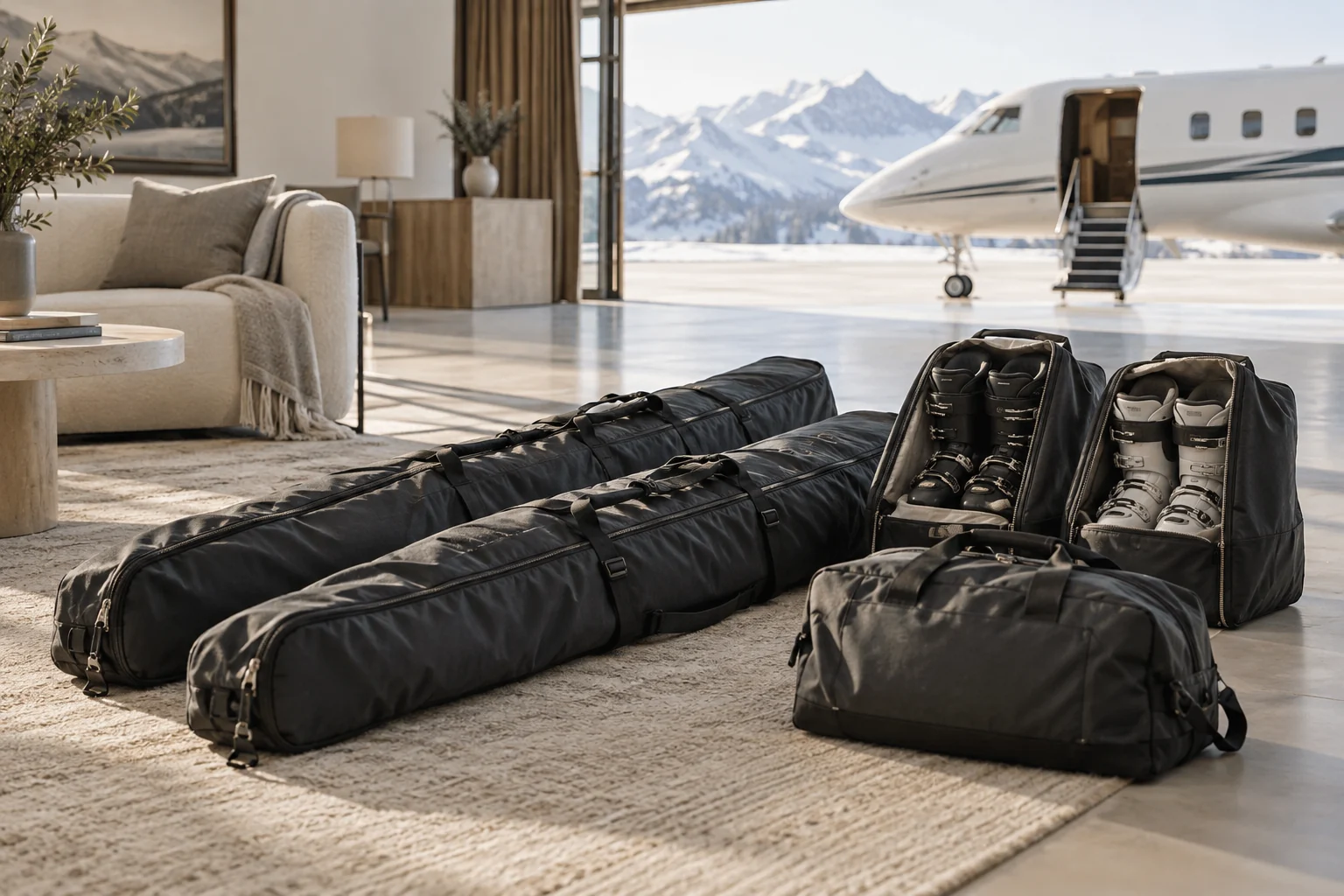
A ski trip often brings several awkward items at once: long ski bags, bulky boots, helmets, winter clothing and sometimes a child’s stroller. Passenger capacity gives little indication of whether that complete load will fit.
Measure the packed bags
Provide the external length, width, depth and approximate weight of each packed ski or snowboard bag. Include wheels, rigid ends and protruding handles. The ski length printed on the equipment does not describe the finished package.
State how many sets share a bag and whether it is rigid or soft-sided. A soft bag can sometimes offer more flexibility, but it does not make a long object shorter or remove protection needs. Never assume crew can bend or dismantle your equipment to make it fit.
Send the full luggage list together. Four ski bags plus four boot bags plus suitcases create a different task from four ski bags alone. Our general baggage guide explains why compartment shape and loading openings matter as much as published volume.
The loading path matters
The operator needs to check both the storage space and the route into it. An item may appear to fit the compartment dimensions but not pass through the opening or turn into the available space.
Ask whether the proposed aircraft accepts the complete load in the intended arrangement. Do not infer acceptance from another aircraft of the same model. Configuration and operating conditions can differ. Likewise, an empty passenger seat does not automatically create an approved place to store skis.
If the operator proposes carrying an item in the cabin, ask how it will be secured without obstructing passengers or exits. Leave the loading decision to the operator and crew rather than planning to negotiate it at the aircraft door.
Boots and small equipment still count
Boot bags consume real space even though they look smaller beside ski bags. Count helmets, protective equipment and children’s gear separately if they are not packed inside the listed bags. Explain which items you need during the flight.
Battery-powered equipment also deserves attention. If you carry heated clothing, spare batteries or an electronic avalanche backpack, give the operator the product and battery or cartridge details in advance. Special equipment can fall under dangerous-goods requirements; private charter does not remove those rules.
Do not describe an avalanche pack simply as a backpack. Different inflation systems create different questions. Obtain specific acceptance rather than relying on a generic packing checklist.
Compare airport access with the road journey
The airport closest to a resort on a map is not automatically the best operational choice. Aircraft suitability, operating arrangements, weather and the ground transfer all matter. Compare the expected journey to the accommodation, not only the flight distance.
If an alternative airport becomes necessary, the transfer vehicle needs a revised pickup plan. Confirm that the vehicle has capacity for the passengers and the measured ski load. A car that seats six may not carry six people’s winter equipment.
Our airport directory and destination guides help with geography. The operator and transfer provider still need to confirm the actual arrangements for your dates.
Keep a workable alternative
If the preferred aircraft cannot accept the load, the options may include repacking, reducing luggage, choosing another aircraft or arranging a separate equipment shipment. Each has a different cost and reliability question.
Rental equipment at the destination may also suit some travellers. Check availability, sizes, collection time and personal requirements before removing essential equipment from the flight plan. Do not rely on an unconfirmed delivery or rental arrangement for a fixed activity the next morning.
Compare the full cost of each solution. A lower aircraft quote can lose its advantage if it requires expensive extra transport or creates a difficult arrival. Use the quote-comparison guide to record those assumptions.
Confirm the return load
Purchases, rented items being returned elsewhere and wet protective covers can change packing on the way home. Keep the agreed bag count and dimensions available. Tell the organiser if the load changes rather than assuming the outward acceptance covers every return arrangement.
If the return aircraft changes, have the loading plan checked again. For children’s equipment, combine the ski list with the family travel checklist so the stroller and child seat do not disappear from the calculation.
A useful equipment message
Send one list with each bag’s dimensions and weight, photographs where helpful, the passenger count and the complete itinerary. Identify unusual powered or pressurised equipment clearly. Ask for written acceptance of the load on the proposed aircraft.
That is more useful than “we are six people going skiing”. It allows the search to start with aircraft that can perform the journey you actually intend to take.
Continue reading
Private Jet Baggage: What Fits, What Doesn’t and What to Measure
Private jet baggage depends on compartment shape, loading openings, weight and the flight’s payload, not simply the number of passenger seats.
6 min read
Flying with Children on a Private Jet: What to Arrange Before Booking
Flying with children on a private jet requires advance agreement on seating, restraints, luggage, documents and the practical needs of each child.
7 min read
How to Compare Private Jet Quotes Beyond the Headline Price
Compare private jet quotes by itinerary, aircraft, inclusions and contract terms before deciding which total represents the better offer.
6 min read