
LUSTRINA JET · Family & pets
Flying with Pets Between Great Britain and the EU by Private Jet
Private pet flights between Great Britain and the EU need direction-specific documents, suitable entry arrangements and approval for the actual aircraft.
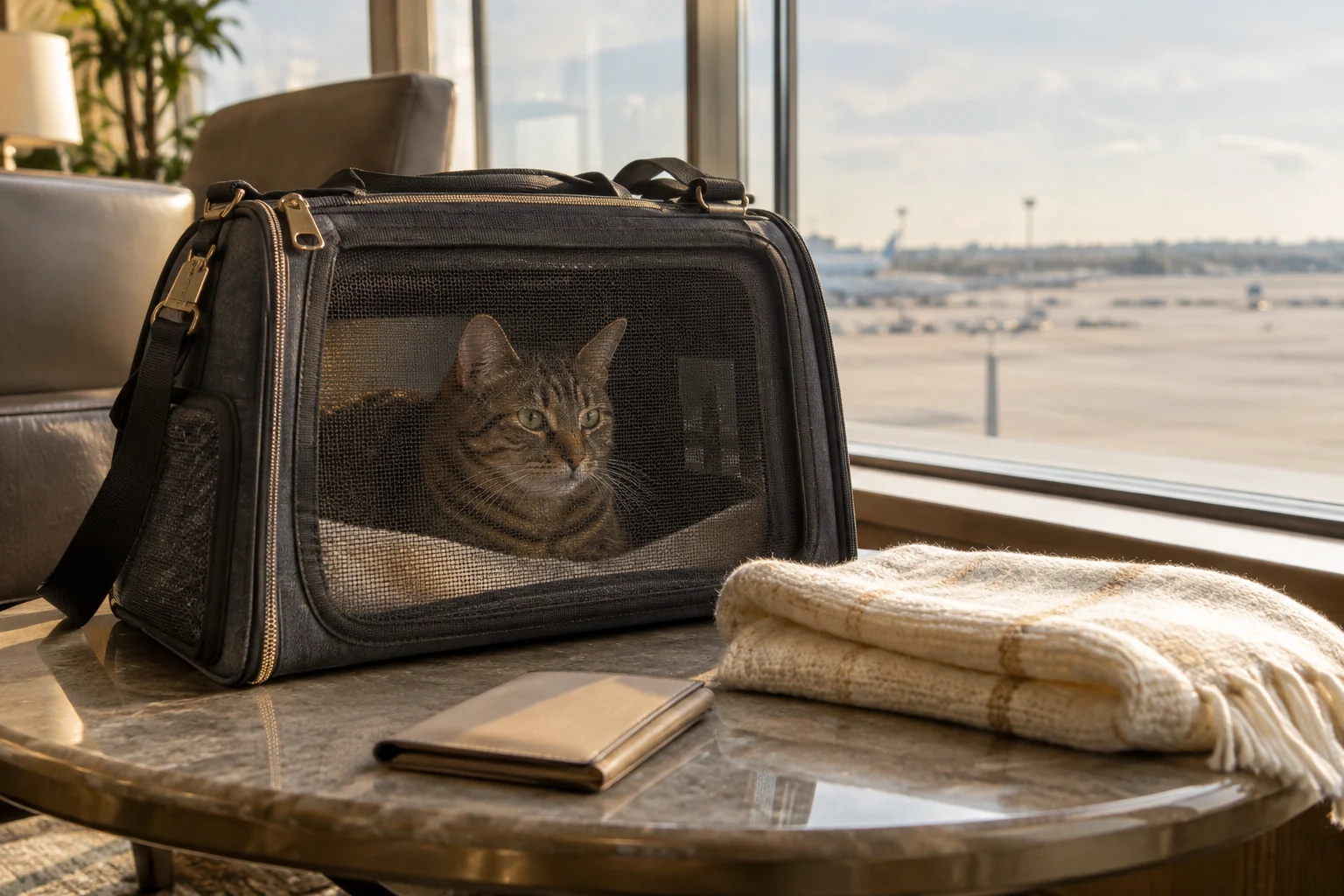
The return journey is not simply the outward journey in reverse. The animal’s documents, the owner’s residence and the carrier’s arrangements can affect the two directions differently. Confirm both legs before committing to the charter.
This guide concerns dogs, cats and ferrets travelling as pets. Great Britain means England, Scotland and Wales; Northern Ireland has separate arrangements. Other species, sale, rehoming and some unaccompanied movements require their own assessment. Requirements below were checked on 29 September 2026.
Start with the direction and the owner’s circumstances
Give the departure country, destination, dates, animal species and who will accompany it. State where the owner lives. Do not describe a document merely as “a European passport” without having its eligibility checked for the person and journey concerned.
The UK government’s guidance changed in April 2026: residents of Great Britain travelling to the EU should obtain an Animal Health Certificate rather than rely on an EU pet passport. An old successful journey is therefore not sufficient evidence for the next one.
That does not mean every traveller worldwide needs the same certificate. A person residing in an EU country with an eligible pet passport is a different case. Have the veterinarian or competent authority assess the actual circumstances instead of applying a rule based only on the departure airport.
From Great Britain to the EU
Begin the document check with a veterinarian authorised to issue the required certificate. Identification and rabies vaccination need to meet the applicable requirements before the travel document can support the journey. A new vaccination or a lapse may affect the earliest possible travel date.
An Animal Health Certificate has a limited window for entry into the EU. Current UK guidance specifies entry within ten days of issue. Plan the appointment around the actual arrival date and have the veterinarian confirm the certificate’s further validity for your itinerary and return.
EU rules and certificate forms changed during 2026. For travel on or after 1 October 2026, have the issuing veterinarian confirm the current certificate model and any transitional provisions rather than reuse a saved blank form. The document should be issued for the rules in force when it will be used.
Check the destination’s authorised entry arrangements, including the airport where checks will take place. The fact that a private jet can land at an airport does not establish that the planned pet entry is permitted there. Include any technical stop in the assessment.
From the EU to Great Britain
Check the animal’s identification, vaccination and accepted travel document for entry to Great Britain. The document accepted for this direction may differ from the document needed when a Great Britain resident next departs for the EU.
GOV.UK allows an exception to the usual air-cargo requirement when travelling on a chartered private plane. This is why cabin travel can be possible. The exception does not remove the other entry requirements or the need to confirm the relevant carrier and route arrangements.
For applicable arrivals, the operator and airport arrangements must be approved for pet entry. Ask for the actual operating carrier and arrival airport to be checked together. A generic assurance that an airport is “pet-friendly” is not enough. Specific exemptions exist, including travel from Ireland, so the origin must be stated accurately.
The approved list changes. Instead of preserving a long list of airports in an article, verify the current combination during the booking. A previous flight by an operator does not establish that every airport and every future itinerary is covered.
Dogs may need timed tapeworm treatment
For entry to Great Britain where this requirement applies, a veterinarian must administer and record the required tapeworm treatment within the prescribed arrival window: at least 24 hours and no more than 120 hours before entry. There are origin-specific exceptions, which should be checked for the itinerary.
The arrival time matters. If a flight is postponed beyond the permitted window, the existing treatment record may no longer be sufficient. Ask the veterinarian and carrier what needs to be done before rearranging the flight.
For a short return trip, plan the treatment with the entire schedule in view. Do not arrange an appointment solely around the outbound departure and then discover that it does not fit the return. This requirement concerns dogs; do not automatically apply it to a cat or ferret.
A booking sequence that avoids wasted commitments
- Establish the route, owner’s residence, species and purpose of travel.
- Have the document position and earliest eligible travel date checked.
- Find an operator and aircraft that accept the animal.
- Confirm the required airport and carrier arrangements for each direction.
- Schedule time-sensitive veterinary steps around the flight.
- Agree fees, cabin placement and cancellation conditions.
- Recheck the plan if the date, aircraft or airport changes.
This order prevents aircraft availability from being mistaken for document readiness. If the animal cannot meet an entry requirement on the desired date, a faster quotation does not solve the underlying problem.
Keep flight acceptance separate from border acceptance
A dog may meet entry rules while remaining unsuitable for the offered cabin arrangement. Conversely, an operator may welcome the dog but be unable to perform the relevant pet-entry operation at your chosen airport.
Give the breed, weight, number of animals and carrier dimensions before the shortlist is built. Confirm the cabin location, restraint requirements and any cleaning charge. Our complete pet travel guide covers those aircraft-specific questions.
If the aircraft is replaced, check both layers again. A substitute may have different pet rules and may be operated by a different carrier. Being the same aircraft model does not transfer the previous approval.
When someone else accompanies the pet
Tell the veterinarian and organiser if the owner and animal travel on different dates or if a friend, family member or professional accompanies it. Written authorisation and the timing relative to the owner’s journey can affect whether the movement remains non-commercial.
Do not assume that calling the accompanying person a passenger settles the classification. Sale, transfer of ownership and rehoming also need explicit disclosure. Groups of more than five pets require particular attention to the applicable rules and exceptions.
These cases should be assessed before an ordinary pet-charter arrangement is offered as suitable. If the movement falls into another category, the documents and entry process may change substantially.
Plan for a delay before it happens
Keep a note of the certificate entry deadline, any treatment window and the confirmed animal-check arrangements. If the departure changes, ask which of these need to be reviewed. Do not assume an alternative airport can receive the animal merely because it can receive the aircraft.
For an empty leg, weigh schedule uncertainty against these fixed requirements. A refund for a cancelled flight does not automatically cover veterinary appointments, accommodation or a replacement charter. Review the agreement before committing.
The terminal and transfer teams should know that an animal is travelling. Allow for required checks after arrival, and keep original documents with the accompanying person. A private terminal can make the experience quieter without eliminating the formalities.
What to send with your request
Send the complete itinerary in both directions, the owner’s country of residence, who accompanies the pet, species, breed, weight, carrier size and current document status. Include any immovable arrival deadline and whether the animal is changing owner.
The London destination guide can help with the geography of a London trip, but the specific pet-entry airport still needs confirmation. To begin the aircraft search, send Lustrina the route and animal details.
Continue reading
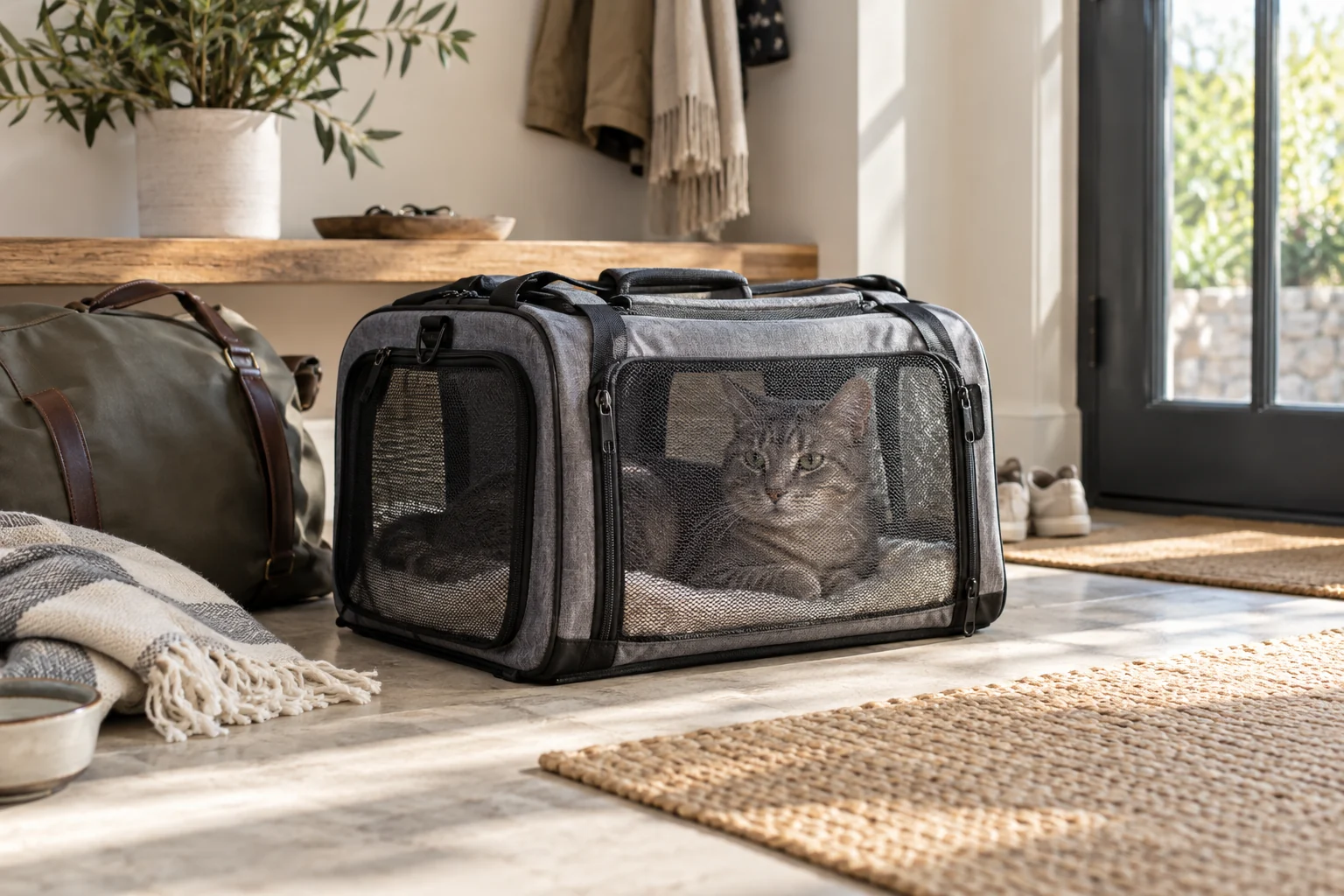
Taking a Cat on a Private Jet: Carrier and Journey Planning
Taking a cat on a private jet requires an accepted carrier arrangement, secure transfers and valid route documents, alongside the operator’s approval.
5 min read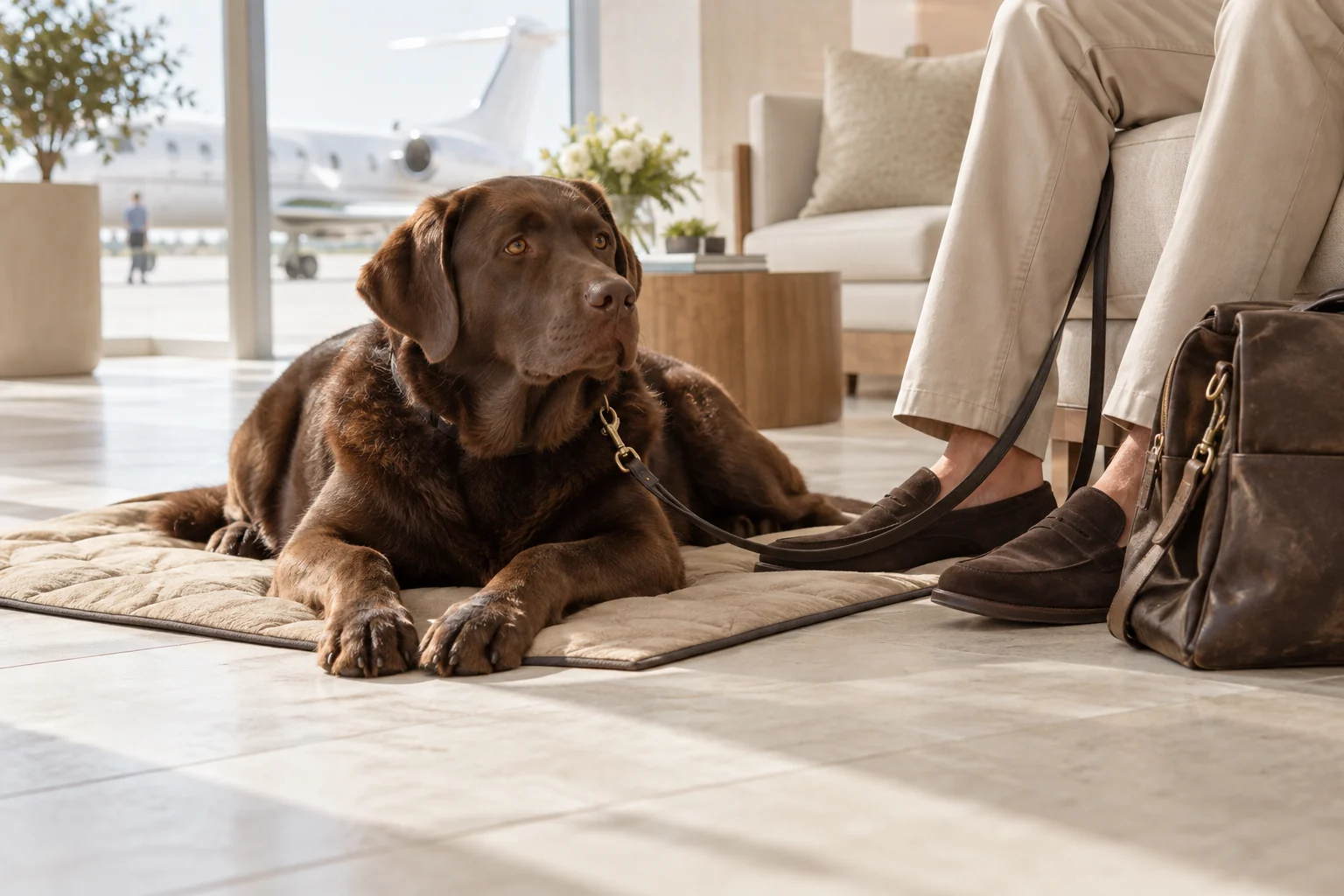
Large Dogs on Private Jets: Space, Boarding and Operator Approval
Large dogs on private jets require individual acceptance, a workable cabin position and a boarding plan, even when an operator welcomes pets.
4 min read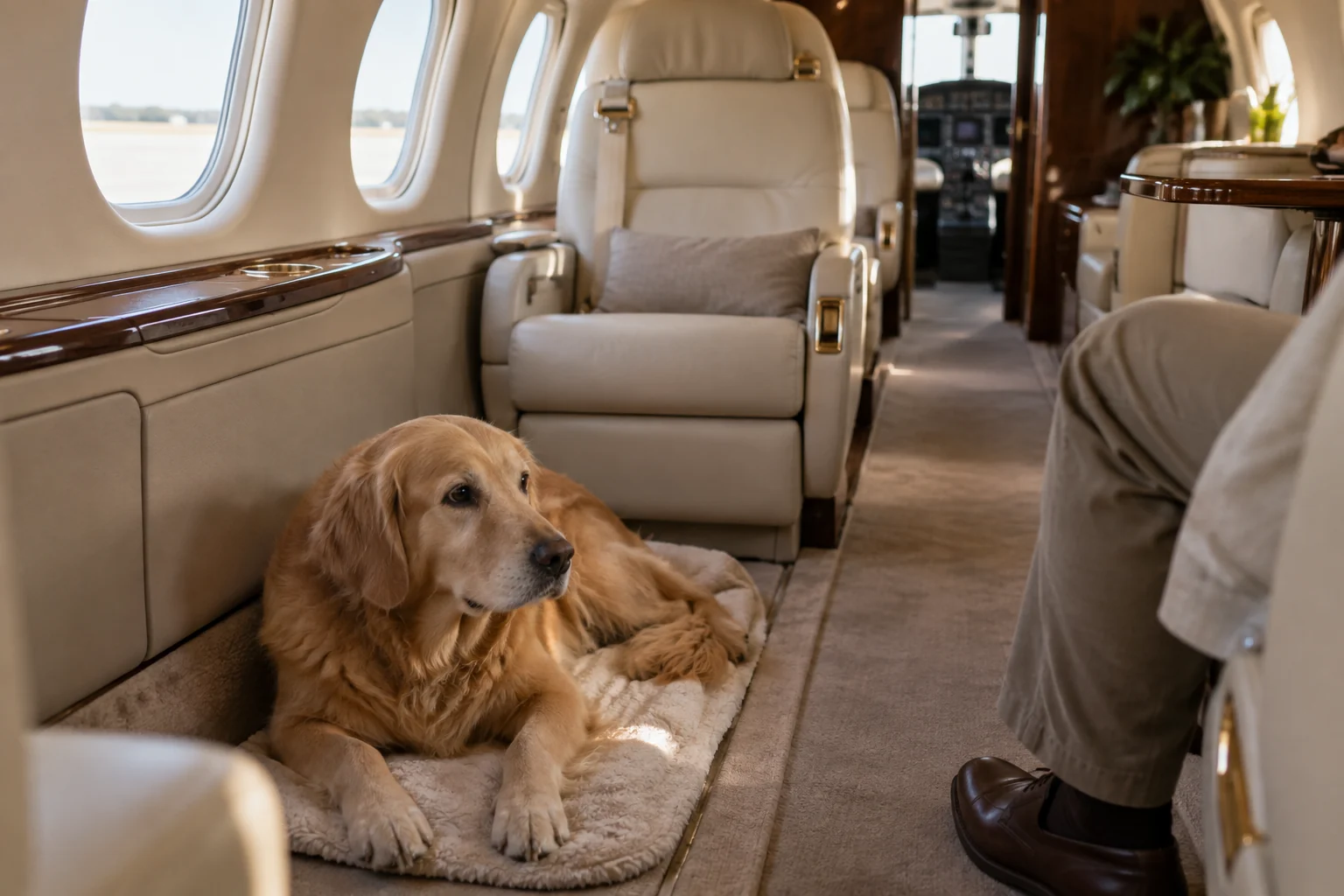
Flying with Pets on a Private Jet: A Practical Planning Guide
Flying with pets on a private jet requires an accepted animal, suitable cabin arrangements and valid documents for the complete route.
15 min read