
LUSTRINA JET · Family & pets
Large Dogs on Private Jets: Space, Boarding and Operator Approval
Large dogs on private jets require individual acceptance, a workable cabin position and a boarding plan, even when an operator welcomes pets.
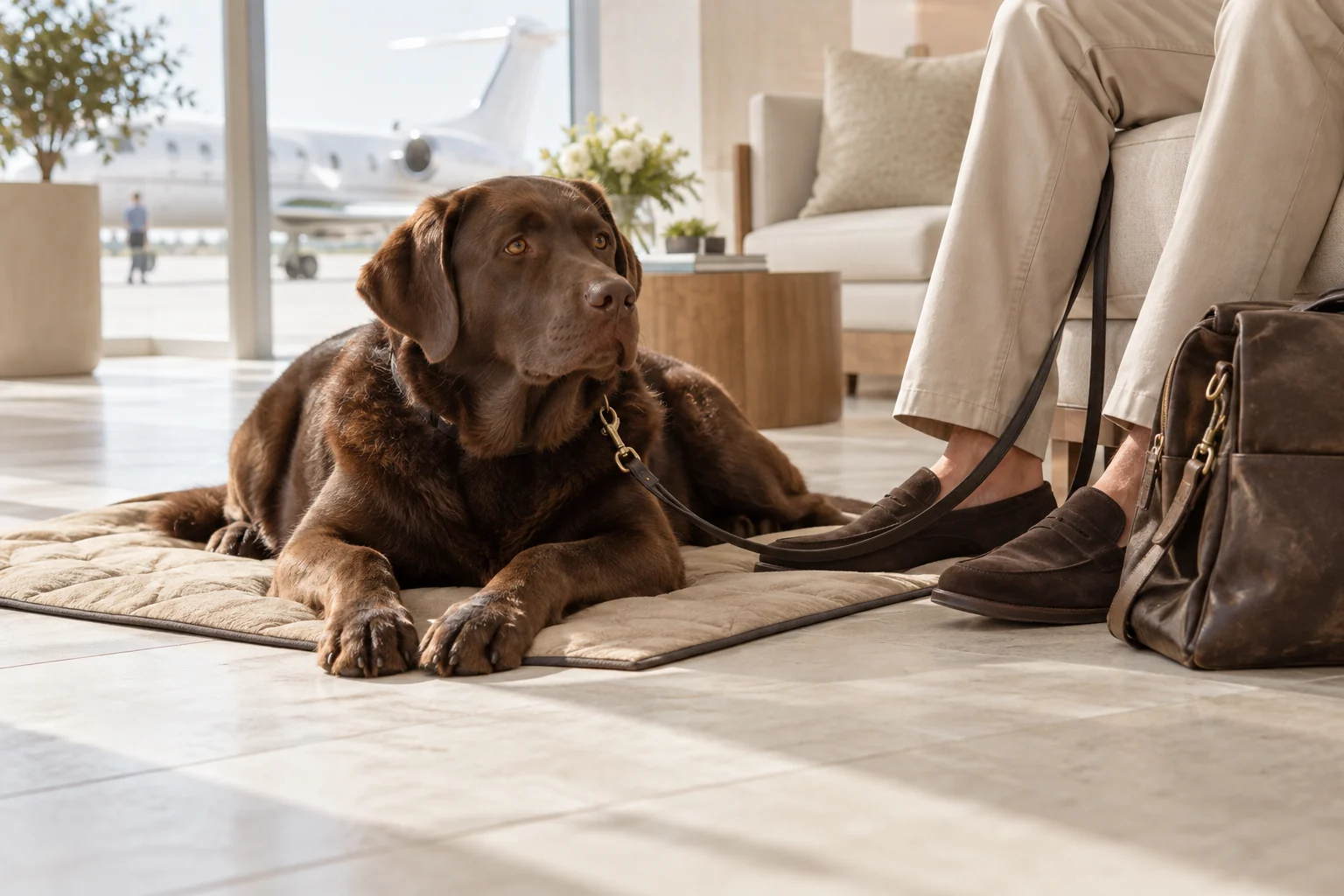
The important measurement is not just the dog’s weight. Its size, mobility, behaviour, carrier or restraint arrangement and the space left for passengers all influence whether the proposed aircraft works.
Send a complete description of the dog
Give the breed or type, approximate weight, age and number of animals. Describe mobility limitations and relevant behaviour honestly. If you intend to use a carrier, provide its external dimensions and identify the actual product.
A photograph can help explain size, but it does not replace measurements. “Labrador-sized” means different things to different people, particularly when the dog needs space to lie down beside its owner.
Include the passenger group and full luggage list. An arrangement that works for two adults may not work for a full cabin. The main pet-flight guide sets out the wider sequence of route, document and aircraft checks.
Ask where the dog will travel
Have the operator describe the proposed position and accepted carrier or restraint arrangement. Ask how the dog can rest without obstructing the aisle, exits or crew access. The answer needs to cover the actual aircraft, not only its model name.
Do not assume the dog can occupy an empty passenger seat. Seat use, protective coverings and the permitted arrangement depend on the operator’s procedures and acceptance. A promotional photograph is not a rule for your flight.
For a large dog, usable floor space can matter more than maximum passenger capacity. Ask whether the owner can remain nearby in an approved seat. If the dog cannot settle within the accepted area, consider another layout rather than treating the aisle as spare space.
Plan the aircraft entrance
Discuss how the dog will move from the vehicle through the terminal and onto the aircraft. Steps, surfaces, noise and an unfamiliar doorway can create practical difficulties even for a dog that travels well by car.
If the dog cannot manage the stairs, agree an appropriate boarding method with the operator before booking. Do not assume crew or handlers can lift a heavy animal. The dog’s welfare and the safety of the people helping both matter.
Keep leads and any agreed handling equipment ready. Follow the handler’s and crew’s instructions around the aircraft. An apron is an operating area, not a place to try unfamiliar equipment for the first time.
Confirm owner approval includes the dog
Some aircraft require the owner’s acceptance of the charter or the animal. Make sure the request contains the dog’s actual details, rather than a generic note that a pet may travel.
Ask whether any cleaning charge, protection requirement or restriction forms part of that acceptance. The owner-approval guide explains why a preliminary quote and final aircraft availability are different stages.
If a substitute aircraft is offered, obtain fresh pet acceptance. The same size cabin does not establish the same owner policy. Recheck the position, boarding and fees as well as the passenger seats.
Understand cleaning and damage terms
Clarify the difference between routine cleaning, exceptional cleaning and physical damage. An agreed pet fee does not necessarily include every possible charge. Ask how the operator documents an additional cost and which contractual clause applies.
Agree who supplies protective materials and where they can be used. Do not improvise covers or bedding that conflict with the crew’s requirements. The purpose is a clear arrangement, not a promise that any dog will remain perfectly still or leave no trace.
Use the charter agreement checklist to keep those points alongside cancellation and substitution terms.
Prepare the whole day, not only the flight
Confirm that both transfer vehicles accept the dog and have room for passengers, luggage and equipment. Ask the terminal about an appropriate place for any necessary preflight walk. Do not assume access to a grass area beside the aircraft.
For health, anxiety, feeding or medication questions, consult the veterinarian who knows the dog. Avoid copying another owner’s routine or improvising sedation to solve a boarding problem. If the animal is unwell, reassess travel with the appropriate professional.
Pack the agreed essentials with a reasonable delay in mind. Keep documents available and identify the person responsible for the dog during each handover. When the journey involves Britain and the EU, review the route-specific document guide.
A useful final check
Before accepting the flight, confirm the dog’s acceptance, cabin location, boarding method, equipment, charges and complete route requirements. Then check that the same details appear in the final operational briefing.
The best aircraft is the one that accommodates the actual dog and group throughout the journey. For a mixed household, our cat-flight guide adds the containment and carrier questions that deserve separate attention.
Continue reading
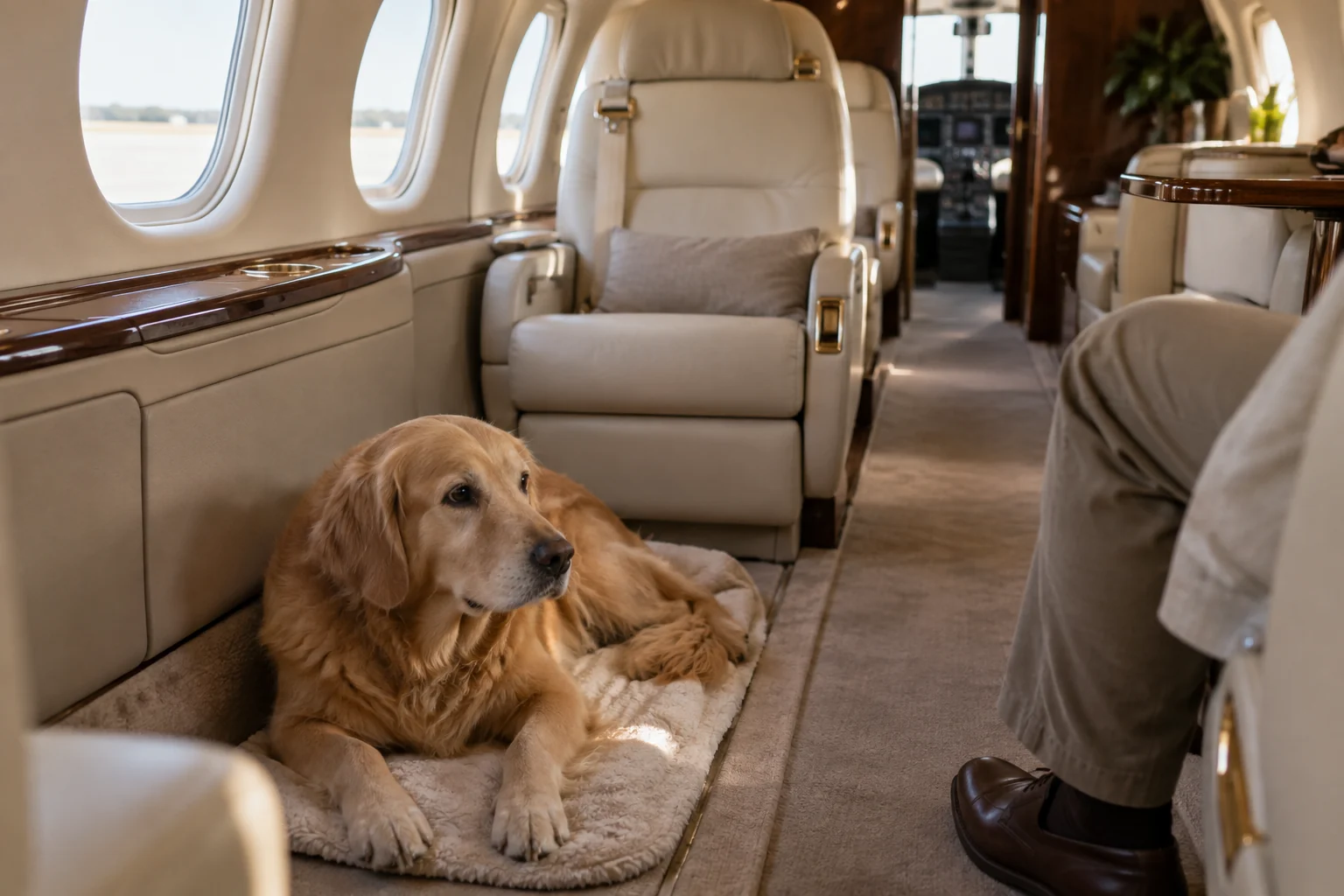
Flying with Pets on a Private Jet: A Practical Planning Guide
Flying with pets on a private jet requires an accepted animal, suitable cabin arrangements and valid documents for the complete route.
15 min read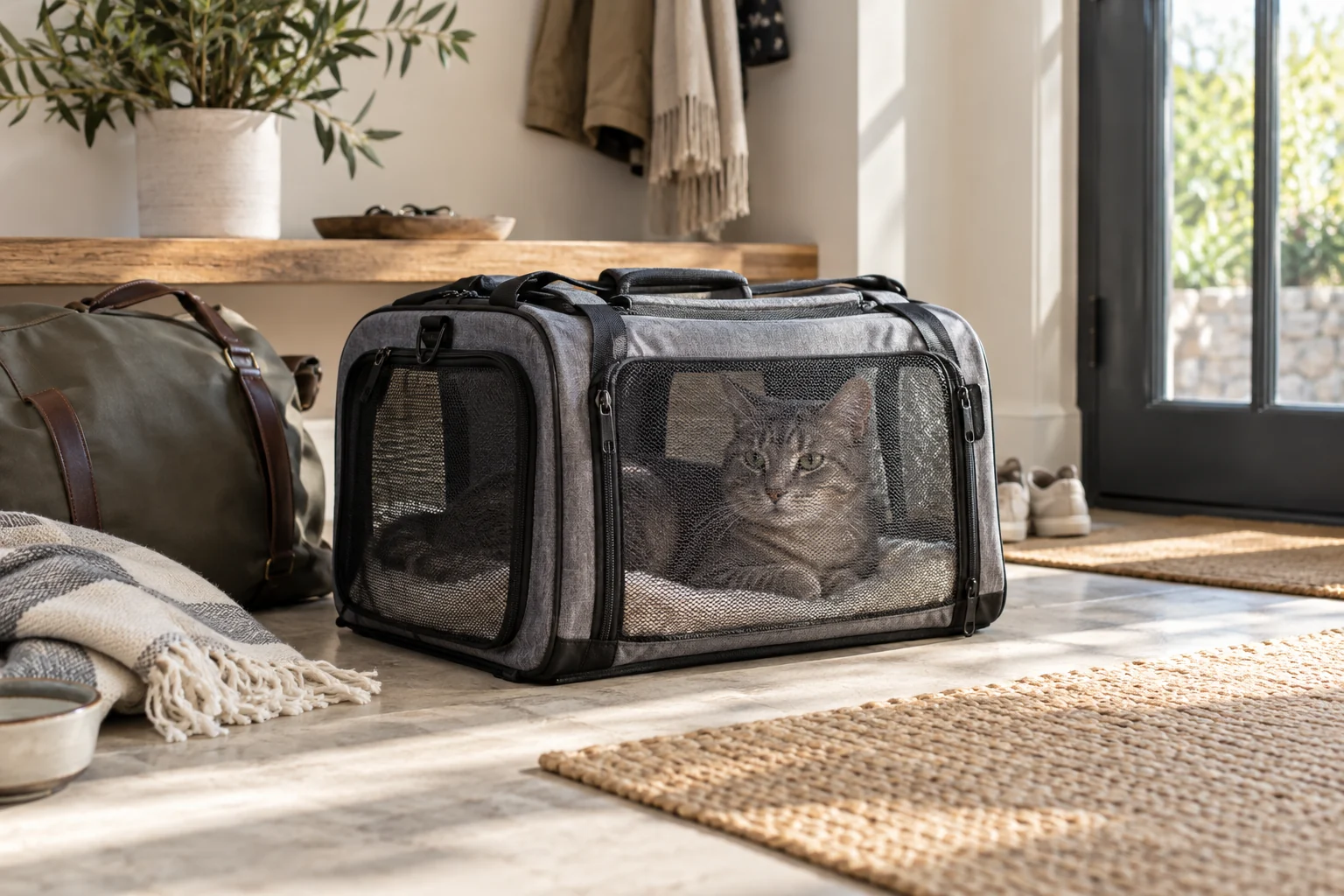
Taking a Cat on a Private Jet: Carrier and Journey Planning
Taking a cat on a private jet requires an accepted carrier arrangement, secure transfers and valid route documents, alongside the operator’s approval.
5 min read
Flying with Pets Between Great Britain and the EU by Private Jet
Private pet flights between Great Britain and the EU need direction-specific documents, suitable entry arrangements and approval for the actual aircraft.
7 min read