
LUSTRINA JET · Winter Travel
Flying Private in Winter: Weather, Delays and De-Icing Costs
Snow in the forecast does not automatically cancel a private flight. Departure may go ahead as planned, wait for aircraft de-icing or be delayed while the runway is cleared. If the weather prevents a landing, the operator and captain assess whether to wait or use another airport. Before booking, check who pays for de-icing and what the contract covers if the itinerary changes.
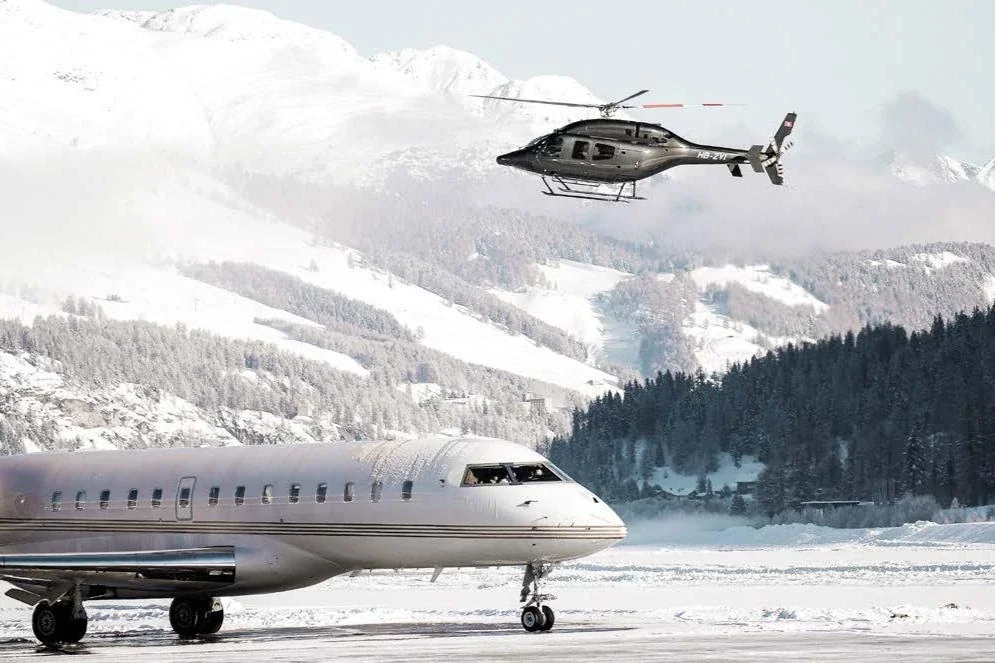
Winter private flights at a glance
Private aircraft can fly in winter, including in snow. Whether a particular flight can operate depends on runway conditions, weather, aircraft performance and load. The operator and captain assess the conditions; snowfall alone does not mean cancellation.
- De-icing and payment. Treatment may be charged as incurred, covered for an additional fee or included in the rate. Check both departures, repeat treatment, limits and empty positioning sectors. As a guide, EFM’s Munich tariff for the Citation C525 in 2026/27 ranges from €1,004 to €3,119 per treatment. The contract determines what you pay. Rates and calculations.
- The airport and resort transfer. Compare hotel arrival times, including the slot, terminal exit with bags and onward transfer. Check operating hours, crew requirements, parking and an acceptable alternative airport. Compare airports.
- Aircraft and baggage. Obtain a calculation for the particular runway and load, confirmation that ski bags fit and the carriage terms for children, pets and special equipment. Helicopter transfers and baggage delivery need separate agreement. Choosing an aircraft.
- The complete cost. Compare the charter, de-icing, parking or hangar storage, positioning flights and transfers. The article’s prices for 11 routes are indicative, rather than offers for any travel date. Route prices.
- Delays and cancellations. Establish the cause, the next decision time, hotel arrival and the full price of any alternative. Refunds after operator cancellation, client cancellation and refusal of a replacement depend on the particular contract. Refund terms.
- Booking and confirmation. For Christmas and New Year, Lustrina Jet recommends booking at least two months ahead. Obtain written terms before paying; the day before and on departure day, check aircraft readiness, weather and transfers. Step-by-step checklist.
Updated 28 November 2026
Some mountain airfields accept visual approaches only in daylight with sufficient visibility. If the aircraft leaves straight after drop-off, provisionally allow 30 to 60 minutes for unloading and preparation. Refuelling or de-icing may take longer; the operator will confirm the interval.
How weather changes a winter flight
For a winter departure, both the aircraft’s condition and the runway matter. For a mountain arrival, visibility, wind and the available approach are particularly important. If the aircraft is being positioned from another city, the operator also considers conditions at its current airport.
How runway conditions affect departure
Slush impedes acceleration, while snow, ice and water can reduce braking grip. Take-off calculations cover both acceleration and stopping after a rejected take-off, accounting for weight, wind, airfield elevation and temperature. An open runway may therefore suit one flight and restrict another.
If take-off weight is restricted, carrying less fuel and refuelling en route may allow all passengers and baggage to travel. The operator checks the first sector with the required fuel reserves and the extra time. Alternatives include another aircraft or an airport with a suitable runway.
Changing aircraft at the same airport usually achieves little during a runway closure for snow clearance. If the restriction concerns the particular aircraft and load, another model may help. The broker establishes the cause before comparing a wait, replacement aircraft and another airport.
What changes on arrival
Before landing, the crew checks stopping distance at the expected weight and runway condition, reassessing destination conditions after departure. The captain decides whether to land. If the airport changes, Lustrina Jet, as an independent charter broker, relays updates and helps coordinate the transfer to the final address.
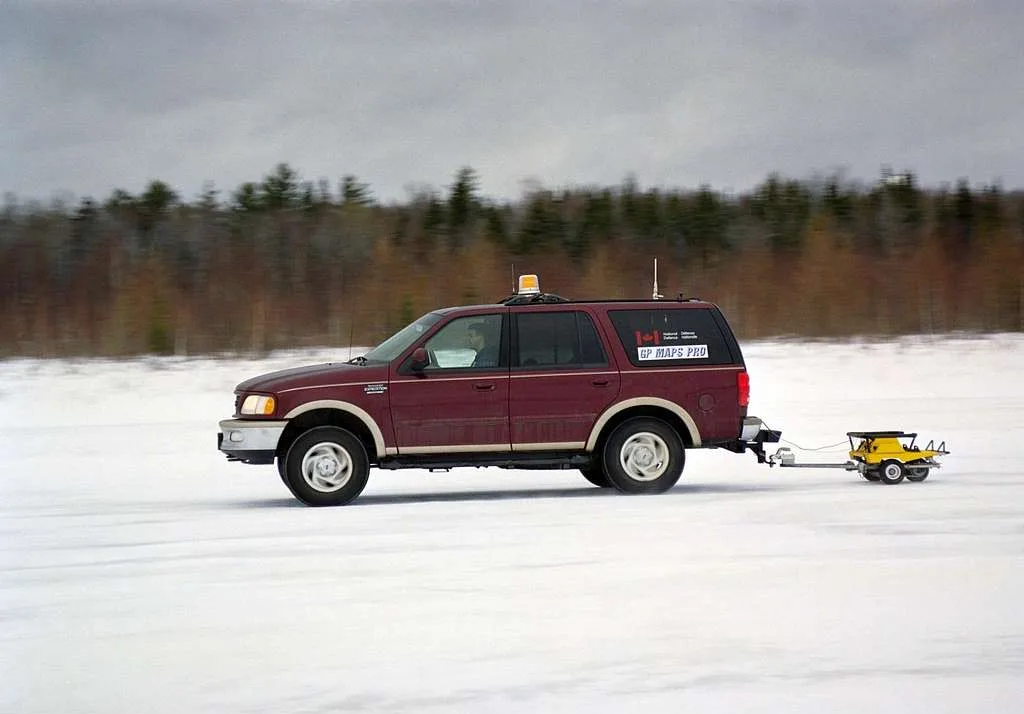
Airports using the ICAO reporting format assess each third of the runway. The report gives a condition code from 6 to 0, the type of contamination, the proportion covered and, where applicable, its depth. In the photograph, a vehicle is towing a friction-measuring device. Its readings can help the airport assess the surface. The crew calculates landing distance using the runway condition report and the performance data for the particular aircraft.
How late can you arrive at a mountain airport?
Plan your departure around local time at the destination airport. For example, Samedan in Switzerland publishes winter operating hours from 08:00 local time until the end of evening civil twilight. If the flight requires a daylight visual approach, the operator separately checks the latest permissible landing time under the applicable rules and expected visibility.
Aircraft de-icing before departure
On an on-demand charter, de-icing is often charged separately. Establish which arrangement applies to each departure.
| Quote arrangement | How you pay | What to check |
|---|---|---|
| Pay for actual treatment | A separate invoice if treatment is carried out and the contract makes the charterer responsible for the cost. | Which services and departures are chargeable, any markup or minimum charge, and how actual costs are documented. |
| Cover for an additional fee | An agreed fee under the operator’s terms, where this option is available. | Outbound and return departures, limits, repeat treatment and exclusions; whether the fee is refundable if no treatment is needed. |
| Included in the rate | De-icing is included for the departures covered by the quote or programme. | Which sectors are covered and whether limits or exclusions apply. An ‘all-inclusive’ price still needs a breakdown. |
Comparing quotes with different de-icing terms
An illustrative example: a second quote with full de-icing cover costs €800 more than the first, which charges for actual treatment. If the first quote results in a €1,200 de-icing bill, the second is €400 cheaper, all else being equal. If no treatment is needed and the cover fee is non-refundable, the first quote is €800 cheaper. Before choosing, check that the cover really includes the relevant departures, repeat treatment and any agreed empty positioning sectors.
Check the deadline for adding cover, any price change after booking and whether it is contractual cost cover from the operator or a separate insurance policy.
How treatment works
Frost can form overnight even without snowfall. Before departure, the aircraft is inspected and, if necessary, cleared of snow, ice and frost. Removing existing contamination is called de-icing. If precipitation continues, anti-icing may also be needed: a protective treatment that temporarily slows the build-up of fresh contamination on clean surfaces. The operator and crew determine the appropriate procedure.
Treatment does not give the aircraft take-off priority. It may still be waiting for air traffic clearance, its turn in the departure sequence or runway clearance. The period of protection depends on the fluid, temperature and precipitation; it is not a guaranteed window for take-off. After a prolonged wait or a change in conditions, the crew follows the operator’s procedures. A further check or repeat treatment may be required. Any extra charge depends on the contract.
What to check on the final de-icing invoice
Before paying, agree how variable costs will be documented, whether through the ground handler’s invoice or the operator’s breakdown. It should identify the airport, date, aircraft, work carried out, number of treatments, rate applied and taxes. If the charge depends on fluid use, ask for the fluid type and quantity. With a fixed rate, aircraft type and contamination category matter. Check any contractual markup or minimum charge separately.
An estimate, a card authorisation hold and a final invoice mean different things. Ask when the actual amount will be confirmed and how any unused hold will be released. De-icing cover does not, by itself, pay for a hotel, ground transfer or cancellation of the trip. Check those terms separately in the contract.
How hangar storage and preparation can help
Hangar storage reduces exposure to precipitation but does not rule out treatment after the aircraft comes outside or waits on an open apron before the return flight. Check parking arrangements for each departure.
Trained personnel may remove loose snow using a method approved for the model. Ice underneath or continuing precipitation may require fluid treatment following inspection.
Will the aircraft stay or return to collect you?
A landing slot does not guarantee parking until the return flight. Compare local parking or hangar storage with repositioning elsewhere and returning to collect you. The latter may add two empty flights, handling and parking away from the resort.
An example for Niseko. At New Chitose, outdoor overnight parking is generally not permitted from 1 December to 31 March. The hangar rules define night as 22:00 to 08:00. The hangar accommodates one aircraft, with a published winter rate of ¥600,000 per night excluding tax and a maximum of six nights per booking. Availability and suitability for the particular aircraft must be confirmed separately.
An illustrative calculation: three nights in the hangar cost ¥1,800,000 excluding tax. That is the hangar charge alone. Passenger services at the HBAC terminal have a separate tariff; landing, other services and crew costs need checking against the quote. To compare this with repositioning, ask for both empty sectors, handling and parking at the second airport, and any de-icing on the additional departures. If your resort stay exceeds six nights, agree the aircraft’s parking arrangements for the full stay in advance.
Comparing hangar storage and repositioning without missing costs
| Arrangement | What to include in the total | What to confirm |
|---|---|---|
| The aircraft stays near your resort | Hangar storage or parking for the full stay, handling, crew costs and treatment before the return departure, as set out in the contract. | Space for every night, the accepted aircraft type, the time it can leave the hangar and readiness for the return flight. |
| The aircraft repositions and comes back | Both empty flights, handling at both airports, parking between flights, crew costs and any de-icing on the extra departures. | Where the aircraft will come from and when, what is already included in the charter, and which items are still estimates. |
Compare complete totals in the same currency and on the same tax basis. Avoid adding costs already included in the charter. The return departure time must also suit your plans.
Why one de-icing treatment costs €1,000 and another almost €10,000
The cost depends on aircraft size, the type, thickness and area of contamination, fluid use, anti-icing and repeat treatment. Providers may charge for actual use or apply a rate by model and contamination category.
At Munich, ground service provider EFM publishes fixed charges for each aircraft type and contamination category. For the 2026/27 season, Citation C525 treatment costs from €1,004 for frost to €3,119 for heavy contamination. For the Challenger 350/3500, the range is €2,371 to €7,361.
Aircraft de-icing costs at Munich
EFM published tariff · 2026/27 · euros per treatment
■ Citation C525 ■ Challenger 350/3500
Frost
Light contamination
Moderate contamination
Heavy contamination
| Aircraft type | Frost | Light contamination | Moderate contamination | Heavy contamination |
|---|---|---|---|---|
| Citation, code C525 | €1 004 | €1 355 | €1 985 | €3 119 |
| Challenger 350/3500, code CL35 | €2 371 | €3 200 | €4 685 | €7 361 |
| Embraer Legacy 650, code E35L | €3 025 | €4 082 | €5 977 | €9 390 |
For each type, treatment for heavy contamination costs more than three times the frost rate. For the Legacy 650, the difference is €6,365. Even with the airport and model known, the final expense depends on aircraft condition and contract terms.
For illustration, assume a Legacy 650 charter costs €18,000. This is an assumption for the example, not a quote for particular dates. Under EFM’s pay-as-you-go tariff at Munich, one treatment for heavy contamination on a Legacy 650 costs €9,390, about 52% of that assumed flight price. If two treatments are needed at the same rate and the contract makes both chargeable, the extra cost is €18,780. This is a calculation using a published tariff. The actual invoice depends on the work carried out and the contract.
How other airports calculate the charge
Munich’s seasonal COLD programme calculates its basic charge by aircraft type. Planned departures for the season are divided by 22 weeks and multiplied by the factor for each type. The basic charge includes treatment work for up to 12% of planned winter departures. Fluid is charged separately according to use. The EFM tariff shown above is the separate tariff for individual payments by cash or card.
At Frankfurt, under N*ICE’s tariff outside the Cold Pool programme, the treatment service for a PC-12 costs €652. Fluid is billed according to use. For the 2026/27 season, de-icing fluid costs €1.17 per litre and anti-icing fluid €1.95 per litre. All three amounts exclude VAT.
At Dortmund, the basic charge depends on maximum take-off weight, with fluid charged according to use. Clermont-Ferrand’s business aviation tariff also separates labour and fluid. Its published fluid price is €5.33 per litre excluding VAT. At Bern, Type I fluid costs CHF 5.80 per litre excluding VAT; labour and disposal are charged separately.
A real Lustrina Jet example: clarifying an estimated €800 charge
The task. While preparing a winter charter, we needed to clarify the de-icing cost and refund terms if the operator cancelled because of the weather.
What we checked with the operator. Lustrina Jet asked for a treatment estimate and the payment terms. The operator quoted approximately €800 and confirmed that treatment would be charged if carried out. The contract also provided for a refund of the sector price if the operator cancelled it because of the weather.
| What the review established | What it meant for the client’s decision |
|---|---|
| An estimate of about €800 | A guide to a variable budget item, not a fixed price or a confirmed invoice for completed work. |
| Payment for treatment actually carried out | This potential extra charge needs to be distinguished from the charter price. The estimate alone does not establish the final cost. |
| A refund if the operator cancels the sector because of the weather | A term of this particular contract. It cannot automatically be applied to a passenger’s own cancellation or refusal of an alternative. |
What this example establishes. This was an actual quote and contract review, without confirmation of a completed flight or final invoice. The €9,390 EFM tariff and €18,780 two-treatment calculation above are separate from the operator’s estimate.
For your trip, see checking the de-icing invoice and the three cancellation scenarios.
Choosing an aircraft for a winter trip
Ask for five things when comparing quotes: the exact model and cabin layout, room for every ski bag and suitcase, take-off and landing suitability at your planned load, the slot and parking arrangements, and the total price with de-icing and transfer terms. Advertised range or seat count alone does not answer these questions.
For a small group hoping to land closer to the resort, first ask which aircraft the operator can use at the chosen airfield. For a larger group, compare seats, baggage-door dimensions and space for the longest bags. Ask for a separate check of the return departure, especially if a long flight with a full load is planned from a mountain airport.
| Model | Published take-off distance | Published landing distance | What to check for the trip |
|---|---|---|---|
| Beechcraft King Air 260 | 643 m | 867 m | Twin-engine turboprop. Baggage space is 1.57 m³. Check the opening and compartment length. |
| Pilatus PC-12 PRO | 758 m | 661 m Maximum landing weight, dry runway | Turboprop with a 1.35 × 1.32 m cargo door. Check the space available with the proposed cabin layout. |
| Pilatus PC-24 | 940 m | 734 m Maximum landing weight, dry runway | Jet with a large rear cargo door. For a mountain departure, ask for a separate take-off calculation at the planned load. |
| Embraer Phenom 300E | 978 m | 674 m 5 occupants, unfactored | Light jet with a combined 2.38 m³ of baggage and storage space. A long bag must fit within a suitable individual compartment. |
| Embraer Legacy 650 | 1 750 m | 866 m Typical landing weight, unfactored | Large cabin and a 6.8 m³ baggage compartment accessible from the cabin. An option for groups with several sets of equipment. |
The calculation conditions differ. The Pilatus figures are for a dry runway at sea level in standard atmospheric conditions, with a 15 m obstacle. Beechcraft publishes an overall performance figure for the King Air 260. For an actual flight, the operator checks both distances against weight, weather and runway condition.
Why a mountain airfield needs its own performance calculation
The PC-24 specification illustrates the difference. For take-off at maximum take-off weight on a dry surface, the manufacturer gives 940 m at sea level in standard temperatures. At an airfield elevation of 1,524 m and 20 °C above the standard temperature for that elevation, it gives 1,657 m. The difference is 717 m. Both elevation and temperature contribute in this example. In winter, snow and ice add restrictions of their own, even in cold temperatures.
For a short runway, compare a King Air or PC-12 with the PC-24 jet, if available. For a longer flight with a larger group, consider a Legacy 650 through a suitable airport, even with a longer transfer. The final choice depends on the route and load calculation.
Who operates the flight, and is the crew qualified for it?
Before paying, obtain the name of the actual air carrier. The broker, aircraft owner and flight operator may be different companies. Ask for confirmation of the Air Operator Certificate (AOC), or the applicable commercial operating authority, and insurance. Documents are checked against the requirements of the operator’s country and the itinerary. If the aircraft or carrier changes, reconfirm these details along with baggage capacity, price and substitution terms.
A suitable model does not, by itself, establish that a particular mountain flight is feasible. Samedan, for example, requires pilots to complete a familiarisation briefing and test before departing for the airport and to carry confirmation. The operator checks crew preparation, current airfield requirements and the calculation for your load. The links in the sources let you check the rules, but the operator and captain retain the final decision on the flight.
Will skis, snowboards and skates fit?
Check each item’s dimensions: a long rigid case may pass through the door but fail to turn inside. Combined compartment volume does not help if none can accommodate the longest item.
Give your broker the number of bags and the length, width and depth of the largest, as well as the number of suitcases. Snowboards with bindings and bags holding several pairs of skis take up more room than the item name suggests. Separate boot and skate bags count towards the total too. If some passengers join only for the return flight, give the group and baggage details for each sector. Share the dimensions with your ground transfer provider as well.
Avalanche equipment, children and pets
Declare avalanche backpacks with gas cylinders or pyrotechnic triggers, spare batteries and power banks separately from your skis. Send the operator the device model, a photograph of its label, the cylinder type and the battery capacity in watt-hours. Special carriage and approval conditions apply. IATA guidance does not allow spare batteries in checked baggage; agree their location and packing with the crew. Obtain approval before departure. Confirmation that an item fits in the compartment is not enough.
If children are travelling, give their ages in advance and check which child restraint is permitted. For a pet, provide the species, weight and carrier dimensions, if a carrier is used. Agree the operator’s rules and the documents needed for every border crossing, including the return. For anyone needing boarding assistance, check the steps or lift and the complete transfer to the hotel. A cabin seat alone does not confirm these arrangements.
Helicopter transfers and ski equipment
A separate helicopter flight takes passengers from the airport to an available landing site near the resort. Some Eurocopter AS350 BA and Airbus H125 helicopters use external ski racks or enclosed side baskets. Carriage depends on the installed configuration and the equipment’s dimensions and weight.
Bicycles use separate external racks, as shown in the photograph. The Aero Design system for the AS350 and AS355 carries up to three bicycles on each side. The operator confirms how many can travel with passengers and suitcases on the particular flight.
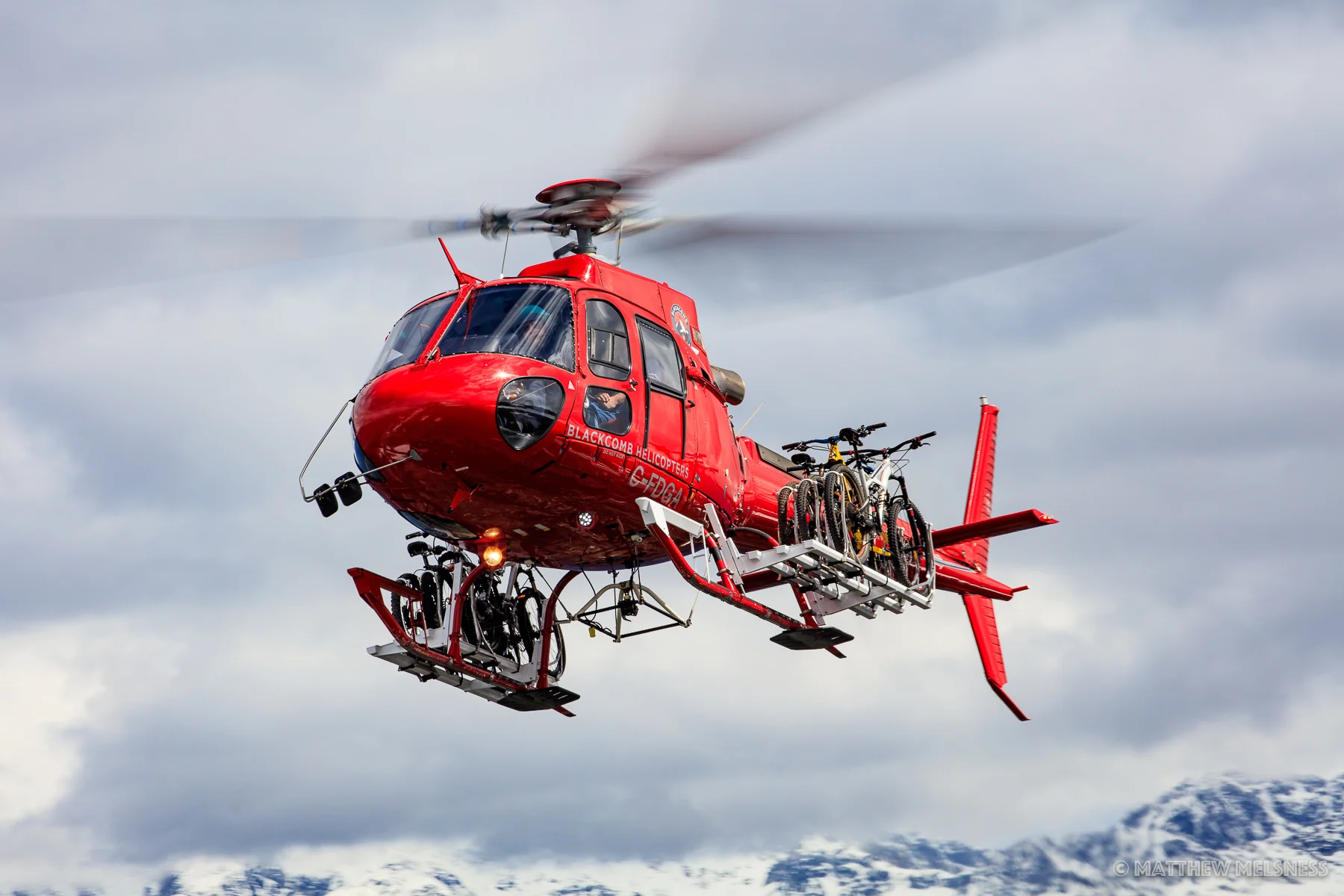
One DART long external basket has a published load limit of 90.7 kg. That figure applies to a particular basket model. The operator determines the flight’s permitted load from the passenger count, fuel and route conditions. Ski bags must also fit the basket’s usable length. Suitcases go in the baggage compartment or a suitable enclosed basket where the helicopter’s configuration permits. Before booking, tell Lustrina Jet how many suitcases, ski bags and bicycles you have, with their dimensions and weights.
Even after the aircraft has landed, the helicopter sector and landing near the resort are assessed separately. If some bags travel by road, keep anything you will need immediately on arrival with you. Agree the decision deadline, collection time, waiting charges and cancellation terms for both the helicopter and the backup car. Otherwise, choosing one transfer may still leave a charge for the other.
Compare the whole journey to the chalet: terminal exit with bags, changeover, helicopter flight and car from the landing site. If skis travel separately, establish arrival times for both passengers and equipment. Calculate the road alternative to the hotel for unsuitable flying conditions.
Which airport should you use for a winter resort?
Add terminal exit with bags and the drive to your landing time. Check operating hours, parking and de-icing for the return. Route prices are listed below.
Courchevel, Verbier and St Moritz: choosing an airport
Courchevel Altiport (CVF) accepts helicopters and approved propeller aircraft with a maximum take-off weight of up to 5.7 tonnes. For a jet charter, compare Chambéry and Geneva. The times below are estimates and should be recalculated for your hotel and travel date.
| Resort | Where to start | Alternative airport to consider | What to check on the ground |
|---|---|---|---|
| Courchevel | Chambéry (CMF) About 1 hr 15 min. A shorter drive. Check slots and parking early for peak dates. | Geneva (GVA) About 2 hr. Compare the available landing time and chalet arrival using the calculation below. | Routes from Chambéry and Geneva normally converge at Moûtiers. Check the final approach road to Courchevel for both options. Changing airport does not reopen a closed road. |
| Verbier | Sion (SIR) About 50 min from Sion, according to the resort. Flights outside operating hours need special permission. | Geneva (GVA) About 1 hr 50 min from the airport. Compare with Sion if the proposed aircraft or arrival time is unsuitable there. | If the road up from Le Châble is closed, check whether the cable car to Verbier is running. Agree baggage carriage, opening hours and collection at the upper station. |
| St Moritz | Samedan (SMV) The airport is about 5 km from the resort. In winter it opens from 08:00 until the end of evening civil twilight. The operator will confirm whether the airfield suits the aircraft and the day’s conditions. | Zurich (ZRH) About 3 hr by car. Consider it if Samedan’s restrictions affect the aircraft choice or landing time. | If a mountain pass is unavailable, ask your driver about a route using the Vereina car train. The tunnel journey takes 18 min. Allow separately for the drive to the terminal, waiting and the journey from the station to the hotel. |
Chambéry or Geneva: when will you reach the chalet?
This is an illustrative example, not a flight schedule. Both options allow the same 20 minutes to leave the private terminal and collect baggage. That is an assumption for the calculation; the actual time needs checking.
| Airport | Landing | Terminal exit and bags | Drive | At the chalet |
|---|---|---|---|---|
| Chambéry | 14:00 | 20 min | 1 hr 15 min | 15:35 |
| Geneva | 13:15 | 20 min | 2 hr | 15:35 |
All times are local. Landing in Geneva 45 minutes earlier offsets the longer drive. This only works if the operator confirms that option and the driver has checked the route to your address. Snowfall and peak travel days can make the transfer longer.
Changing airports may help with a landing restriction. If the shared route through Moûtiers or the final resort road is closed, check the available road options separately. A helicopter is considered only with suitable weather and a confirmed landing site. If the journey cannot continue, the transfer time will need to change.
Zermatt: the road journey ends at Täsch
For Zermatt, compare operator-approved flights via Sion and Geneva with a change at Täsch. The resort is closed to ordinary cars. The shuttle train from Täsch takes 12 minutes; add waiting, ski transfers and the journey from the station to the hotel. Agree passenger and baggage collection at every stage.
What to check at the main Alpine airports
An airport listing de-icing or hangar storage does not establish availability for your flight. The operator needs to check aircraft size, service hours and agreed handling for both departures. If parking or a necessary service is unavailable, compare another airport or a repositioning arrangement. Besides de-icing, check the refuelling, ground power, heating and technical support needed by the chosen aircraft. Check border and customs service hours and the notice required for your itinerary separately. These may differ from runway operating hours.
Geneva (GVA). Business aviation uses Terminal T3 on Route de Meyrin. Flights outside the slot coordination system require prior permission. If you are continuing into France, agree border formalities with the operator and the meeting point with your driver at T3 in advance.
Chambéry (CMF). The main runway is 2,020 m long, and the airport lists a Category I instrument landing system (ILS). Check timing and parking for both arrival and departure after your stay. If the aircraft is not remaining at Chambéry, ask where it will come from for the return flight.
Sion (SIR). The airport publishes crew qualification requirements for certain approaches. Non-based aircraft with a maximum take-off weight over 3 tonnes require a handling provider. Arrival confirmation, parking and the return flight should be checked together.
Samedan (SMV) and Zurich (ZRH). Samedan is at an elevation of 1,707 m. For a larger aircraft, the operator separately checks the landing and return take-off at the planned load, as well as crew preparation for the airport. If you choose Zurich, ask the handler to confirm the slot and agree the route into the Engadin. The Samedan source notes explain four documents separately: operating hours, pilot preparation, weather and handling. Each note identifies what the document establishes and what still needs confirming for your flight.
Other Alpine airports for private flights
For the French Alps, Arlberg and the Dolomites, also compare the following airports.
| Airport | Resort or area | When to consider it and what to check |
|---|---|---|
| Grenoble (GNB) | France · Les Deux Alpes | The resort gives a distance of about 120 km from the airport. Compare the journey time to the hotel with Lyon. On either route, the driver should check the RD1091 towards the resort. |
| Lyon Saint-Exupéry (LYS) | France · Courchevel, Les Deux Alpes | Another option if Chambéry or Grenoble is unsuitable for the aircraft or arrival time. Its longest runway is 4,000 m, with customs and border services listed as available around the clock. Courchevel is about 2 hr away according to the resort. |
| Lyon-Bron (LYN) | France · an alternative for journeys from Lyon to the Alps | Business aviation terminal and a 1,820 m runway. Check border and customs services in advance for flights from the UK. If Saint-Exupéry better suits the load or timing, request a separate calculation for that airport. |
| Annecy (NCY) | France · La Clusaz and Le Grand-Bornand | An option for the Aravis resorts. The runway is 1,598 m long. The operator must confirm arrival and return departure at your load; the driver should check access via Thônes. |
| Saanen (LSGK) | Switzerland · Gstaad | The closest airfield to Gstaad. Ask the operator to confirm acceptance, timing and performance for its short runway in advance. If Saanen is unsuitable, Gstaad is about 2 hr by road from Geneva Airport. |
| Bern-Belp (BRN) | Switzerland · Gstaad | About 1 hr 30 min by car, according to the resort. An option to compare if Saanen is unsuitable. Before paying, check arrival and departure hours for the chosen aircraft: the airport publishes separate hours for aircraft over 3.5 tonnes. |
| Innsbruck (INN) | Austria · Lech and Zürs | The resort gives a drive of 1 hr 30 min to 1 hr 50 min. The operator checks the applicable approach requirements and crew readiness. On the ground, check access to Zürs via the Flexen Pass. |
| St Gallen-Altenrhein (ACH) | Switzerland · Lech and Zürs | An alternative with access from the west. Obtain a driving time for your address and date. Check airport hours and the cross-border transfer. Check the final resort approach for both options. |
| Salzburg (SZG) | Austria · Saalbach and Hinterglemm | The resort gives a distance of about 90 km to Saalbach. The main runway is 2,750 m long. Aircraft over 3.5 tonnes must book the airport’s ground handling package in advance. Confirm the car for the agreed arrival time. |
| Bolzano (BZO) | Italy · Val Gardena | About 40 km to the valley according to the resort. The runway is 1,432 m long, and approval is required for instrument approaches. The operator will check whether the flight can be accepted. |
| Verona (VRN) | Italy · Val Gardena | About 191 km to the valley according to the resort. Compare it with Bolzano if the closer airport is unsuitable for the aircraft or timing. On the route via Chiusa, check the final approach to your particular hotel separately. |
| Resort | Airport to compare first | What to consider after landing |
|---|---|---|
| Kranjska Gora, Slovenia | Ljubljana | According to the resort, the airport is less than an hour’s drive away. |
| Jasná, Slovakia | Poprad-Tatry | The resort lists it as the closest international airport. Specify which side of the ski area and which hotel you are travelling to. |
| Grandvalira, Andorra | La Seu d’Urgell or Barcelona | La Seu is about 30 km from Encamp. Compare availability for the chosen aircraft and the ground journey. |
| Trysil, Norway | Scandinavian Mountains Airport or Oslo | The first airport is in Sweden and offers a short transfer to the resort. Account for the cross-border drive when choosing. |
| Bansko, Bulgaria | Sofia | The resort gives a distance of about 150 km from Sofia. Include the drive to your particular hotel in your arrival plan. |
Aspen, Whistler and Japan: what changes in the itinerary
- Aspen. The airfield elevation is about 2,389 m, with a published wingspan limit of 95 ft, approximately 29 m. The operator checks the particular aircraft’s suitability. The airport has announced a reconstruction closure from 23:00 on 4 April until 19:00 on 19 November 2027, local time. If your trip includes those dates, plan around another airport from the outset, including for the return. Eagle or Rifle can be compared following the operator’s assessment; calculate the winter drive to the hotel separately.
- Whistler. The tourism office gives a distance of 135 km from Vancouver Airport. Once you have chosen a flight, agree a car with room for all the equipment and reassess the drive for your landing time.
- Niseko. Start the comparison with New Chitose. Check the journey to your hotel and the aircraft’s parking or return positioning arrangements, as these can affect the cost of the return flight.
- Hakuba. A route through Tokyo and Nagano needs to include the journey from the airport, the wait for the train and the onward transfer to the hotel. Compare the complete journey with a direct road transfer, especially if the group has several long ski bags.
Check Japan’s permit deadlines separately
An available aircraft does not, by itself, confirm that a short-notice charter to Japan is possible. Under the MLIT guidance dated 1 October 2026, the general application deadline for paid carriage by a foreign business jet is 30 days before the flight. For a tourism trip by an operator with an office or agent in Japan, a 72-hour deadline is provided. The operator checks whether the shorter deadline or other exceptions apply. This is an application deadline, not a promise that a permit will be issued. The slot and parking stand must be coordinated before applying. For Niseko, combine this check with the choice between a hangar and repositioning.
Banff, Reykjavík and Tremblant: three more winter itineraries
- Banff and Lake Louise, Canada. Start with Calgary (YYC). The tourism office gives a drive of about 90 minutes to Banff National Park; that is not the journey time to every hotel in Lake Louise. Provide the exact address, check winter road conditions and make sure the car has room for skis. Add the time to leave the private terminal separately.
- Reykjavík, Iceland. For a journey via Keflavík (KEF), Visit Iceland gives about 40 to 50 minutes by road to Reykjavík. Compare flights to a named airport: the capital’s name does not establish where the aircraft will land. Before leaving for your hotel or an excursion, check road conditions, the meeting time and whether the programme can be moved if you are delayed.
- Tremblant, Canada. The resort gives a journey of about 90 minutes from Montréal-Trudeau Airport (YUL). Ask for a calculation to your hotel, confirm carriage of long bags and agree the car’s collection time at the private terminal. If the operator suggests another airport, recalculate the whole final stage rather than applying the YUL estimate to it.
How much does a private flight to the Alps cost?
Below are Lustrina Jet’s indicative prices for specific airport pairs. Each cell gives an aircraft model, the one-way price for the whole aircraft and approximate airborne time, excluding taxiing.
| Flight airports | Turboprop | Light jet | Midsize jet |
|---|---|---|---|
| London → Geneva Biggin Hill (EGKB) → Geneva (LSGG) | €8 900 Pilatus PC-12 · 1 hr 48 min | €10 150 Citation CJ2+ · 1 hr 35 min | €14 500 Citation XLS+ · 1 hr 30 min |
| Paris → Geneva Le Bourget (LFPB) → Geneva (LSGG) | €4 900 Pilatus PC-12 NGX · 1 hr 15 min | €5 900 Embraer Phenom 100E · 1 hr 5 min | €9 000 Hawker 750 · 1 hr |
| Amsterdam → Geneva Schiphol (EHAM) → Geneva (LSGG) | €7 800 Pilatus PC-12 · 1 hr 50 min | €9 300 HondaJet Elite S · 1 hr 25 min | €14 200 Learjet 75 · 1 hr 20 min |
| London → Samedan Biggin Hill (EGKB) → Samedan (LSZS) | €10 200 Beechcraft King Air 350 · 2 hr 10 min | €12 400 Pilatus PC-24 · 1 hr 50 min | €18 600 Learjet 45 · 1 hr 45 min |
| Paris → Samedan Le Bourget (LFPB) → Samedan (LSZS) | €7 200 Pilatus PC-12 NG · 1 hr 40 min | €8 700 Cessna Citation CJ3+ · 1 hr 20 min | €13 500 Learjet 60XR · 1 hr 15 min |
| London → Bern Biggin Hill (EGKB) → Bern-Belp (LSZB) | €8 500 Piaggio Avanti EVO · 1 hr 40 min | €10 100 Nextant 400XTi · 1 hr 30 min | €15 200 Cessna Citation Sovereign · 1 hr 25 min |
| London → Lyon-Bron Biggin Hill (EGKB) → Lyon-Bron (LFLY) | €8 300 King Air 350 · 1 hr 50 min | €10 200 Citation CJ2+ · 1 hr 30 min | €14 500 Citation XLS+ · 1 hr 30 min |
| London → Innsbruck Biggin Hill (EGKB) → Innsbruck (LOWI) | €10 700 Piaggio Avanti II · 2 hr 05 min | €12 800 Cessna Citation Bravo · 1 hr 55 min | €19 400 Hawker 900XP · 1 hr 50 min |
| Paris → Innsbruck Le Bourget (LFPB) → Innsbruck (LOWI) | €7 800 Beechcraft King Air 200GT · 1 hr 50 min | €9 600 Cessna Citation CJ4 · 1 hr 25 min | €14 900 Hawker 850XP · 1 hr 25 min |
| Amsterdam → Innsbruck Schiphol (EHAM) → Innsbruck (LOWI) | €8 300 Beechcraft King Air 260 · 1 hr 55 min | €10 000 Cessna Citation M2 · 1 hr 30 min | €15 300 Citation VII · 1 hr 25 min |
| London → Salzburg Biggin Hill (EGKB) → Salzburg (LOWS) | €11 500 Beechcraft King Air 200 · 2 hr 20 min | €13 900 Beechcraft Premier 1A · 1 hr 55 min | €20 800 Cessna Citation Latitude · 1 hr 50 min |
These examples are based on operator quotes received between May and November 2026. Dates, group size, baggage and aircraft availability affect the final price. Resort transfers are priced separately. Before paying, check the de-icing terms and the cost of changing airports.
Compare quotes for the same route and dates. The Bern price is for Bern-Belp Airport, and the Lyon price is for Bron. Arrivals at Saanen, Lyon Saint-Exupéry, Chambéry or Sion require separate calculations.
Send the route and dates, passenger numbers for each sector, the resort or hotel address, the latest acceptable local arrival time and ski-bag dimensions. Add the number and weight of suitcases, children’s ages, pet details and any boarding assistance needed. This allows the aircraft and ground transfers to be compared on the same basis.
Checklist: what to confirm before paying, the day before and on departure day.
When an empty leg can work in winter
An empty leg is a flight the aircraft needs to make without passengers. It can offer a lower price if the route and timing suit you. However, it depends on the main booking that requires the aircraft to move. Before paying, check what happens if that flight changes or is cancelled, whether a replacement will be offered and what it could cost. Compare the return flight and transfer separately.
If you need to reach an event or arrive before a mountain airport closes, compare the complete trip and disruption arrangements with a normal charter. A low price for one sector is less helpful if its cancellation leaves you buying an urgent replacement flight. See available options on our empty leg.
When to book a winter charter
For Christmas, New Year and other peak winter dates, Lustrina Jet recommends booking at least two months ahead; clients often confirm the busiest dates six months in advance. This allows more aircraft choice and time to arrange slots and transfers. Holiday prices may be higher because of demand and limited aircraft availability.
For holiday flights, confirm the operating hours of the airfield, private terminal and de-icing service for both sectors in advance. Smaller airfields may have a special timetable. If the aircraft cannot stay locally, the operator checks where it can park between flights.
More on winter private flights in Europe
What Lustrina Jet checks before a winter flight
Request a written summary of what is confirmed, what has been requested, what remains outstanding, the next decision deadline and the consequences of refusal. Parking needs confirmation for the full stay or a priced repositioning plan; weather needs a time for the next assessment.
Before paying
- Who operates the flight, which commercial permissions and insurance apply, which aircraft is proposed and whether the crew is prepared for the chosen airfield. Check the group and all baggage, including items with special carriage conditions.
- What has been confirmed for slots, necessary permissions and parking on each sector. If confirmation is pending, when is it due and what happens to your payment if it is refused? Check that border and customs service hours fit the schedule.
- Whether de-icing and hangar space are available for this aircraft at the required time. What hangar storage or repositioning with a return collection costs, and whether it is included.
- Who pays for de-icing outbound, on the return and on any agreed empty positioning sectors. For cover, check the fee, limit, repeat treatment, exclusions and whether an unused fee is refundable.
- Which alternative airport and ground route are suitable, and how they affect the price and hotel arrival time.
- Which refund or change terms apply if the operator cancels, if the client cancels a flight that can still operate, or if the client declines the alternative offered.
The day before
- Where the aircraft will spend the night immediately before your flight: in a hangar or on the apron, at the departure airport or in another city. Where it will be positioned from and when.
- Expected weather, runway and operating-hour restrictions at the parking, departure and arrival airports. Whether the alternative airport and transfer remain available.
- When the next update is due and who in the group will receive it. If positioning has not begun, when a decision on the alternative is needed.
On departure day
- Confirm the local departure time, airport, exact terminal and passenger arrival time.
- Check the car’s collection time, space for skis and suitcases, and the expected hotel arrival. If the airport changes, obtain the new meeting address.
- If delayed, ask for the reason, the next update time and the effect on the transfer and price. The operator and crew decide whether the flight can proceed.
What to do if the flight is delayed, diverted or cancelled
- Establish the cause and the next decision time. Runway clearance, a de-icing queue and a restriction affecting a particular aircraft call for different actions.
- Compare feasible options all the way to your final address. A new time, aircraft or airport needs to be assessed together with baggage and transfers.
- Obtain the price and terms before agreeing to changes. Clarify any extra charge, refund or credit for the original sector, and what happens to the return flight.
For each alternative, establish flight feasibility, hotel arrival and the full price, including any airport change, transfer, parking, positioning and de-icing under the contract.
Why the crew may still be unable to depart when the weather improves
Crew duty time includes preparation, earlier assignments and waiting under the applicable rules. A long delay may exhaust the permitted time before the trip can be completed. The operator confirms the calculation for its jurisdiction and type of operation; there is no single hourly limit for all charters.
During a long delay, ask four questions: by what time can this crew start and complete the entire agreed itinerary; have positioning and the return sector been included; when is a decision on replacement needed; and what are the new option’s arrival time and price? If a replacement crew is available, confirm its readiness and qualifications for the chosen airfield separately. A new crew does not, by itself, resolve a closed runway or poor visibility.
If the trip cannot be completed today. Before ordering a replacement, agree overnight accommodation, changes to ground transport and payment arrangements. If your arrival deadline is firm, you can compare a normal charter with a backup scheduled flight in advance. Check ticket terms, check-in closing time, terminal transfers and ski carriage. A ticket does not guarantee that the scheduled flight will operate in the same bad weather. Any backup charter aircraft also needs confirmation, including its price and positioning time.
Options the operator may offer
| What has happened | Options the operator may offer | What passengers should establish |
|---|---|---|
| Departure is delayed by runway clearance or aircraft treatment | Wait for the runway to be cleared or the aircraft to be ready, or move departure to another time. | When the next update is due and when to reschedule the car to the airport. |
| The runway restricts take-off weight | Assess a refuelling stop en route, change aircraft or depart from another airport. | Whether all passengers and their planned baggage can travel, and when the group will reach its final address. |
| Weather prevents a landing near the resort | Change the arrival time or land at another suitable airport. | Which terminal the car will meet, the drive to the hotel and whether the complete trip price changes. |
| The operator cannot perform the flight | Offer another time, date or airport. Cancel the flight if no suitable solution is available. | What the contract refunds if the alternative is unsuitable, and when aircraft positioning costs may start to apply. |
A useful update when the arrival airport changes
The message needs a new time, meeting point, hotel arrival estimate, price change and next step. An illustrative example:
“The operator has proposed landing at Geneva at 13:15 local time instead of Chambéry at 14:00. After baggage collection, the meeting point will be business aviation Terminal T3. We will send the exact exit and driver’s contact details once handling is confirmed. The calculation allows 20 minutes for terminal exit and bags, followed by a drive of about 2 hours. With clear roads, we expect you at the chalet at 15:35. The additional cost for this flight and car change is €600. De-icing is charged separately under your contract. The next update is at 11:00. Please confirm whether this option works for you so that we can arrange the changes.”
The times, terminal and €600 are illustrative. This is neither a quote nor an account of a completed flight. In an actual update, those details must reflect confirmation from the operator and ground service provider.
Cancellation and changes: three different situations
| Situation | What to establish in the contract |
|---|---|
| The operator cancels a sector | The amount refunded for the unflown sector, its form and the payment deadline. Whether agreed preparation or positioning costs are retained, and whether the return flight remains in place. |
| The client wants to change a flight the operator can perform | Whether the date or time can be changed, what it costs and whether client cancellation terms apply. An unfavourable forecast alone does not establish that the operator has cancelled. |
| The alternative offered does not suit the client | Whether declining it gives a refund or credit for a future flight, or counts as a client cancellation. Agree acceptable airports and hotel arrival times before paying. |
The particular contract determines the outcome. A full refund is not a universal charter rule. Before paying, ask for a written explanation of all three situations and establish when non-refundable costs begin. If the forecast raises concerns, agree the next update before the aircraft is positioned.
If passengers hold separate scheduled tickets after the charter, mention the connection at the outset. Border formalities and a terminal transfer may fall between landing and checking bags in for the next flight. Oversized baggage is particularly important. Know the actual check-in closing time and establish which alternative would preserve the connection after a delay.
Agree one contact person for the group with Lustrina Jet in advance so that changes reach everyone.
Frequently asked questions about winter private flights
Will a private flight be cancelled if it snows?
Snowfall does not automatically mean cancellation. It can delay a flight for aircraft treatment or runway clearance. The decision depends on actual conditions at both airports, the runway and the particular aircraft’s capabilities. Sometimes the flight can operate at another time or through another airport.
Why is the aircraft waiting after de-icing?
It may be waiting for air traffic clearance, its turn or runway clearance. The protective layer lasts for a limited period. If departure is delayed or snowfall increases, the crew follows the operator’s procedures. A further inspection or treatment may be needed. Any extra charge depends on the contract.
Can an aircraft take off from a snow-covered runway?
The decision is based on the airport’s report and a calculation for the particular aircraft. Weight, surface condition and available distance can change the permitted load or the route itself. If the operator suggests another airport, ask whether the resort arrival time changes once the drive is included.
Why might a winter flight need a refuelling stop?
If runway conditions restrict take-off weight, it may be possible to carry less fuel on the first sector and refuel en route. This can retain space for all passengers and their baggage. Feasibility and the extra time are checked for the particular flight.
How much does private jet de-icing cost?
It depends on the aircraft, the condition of its surfaces and the airport tariff. At Munich, EFM’s pay-as-you-go tariff for 2026/27 charges €1,004 to €3,119 for a Citation C525, from frost to heavy contamination, and €3,025 to €9,390 for a Legacy 650. What the passenger pays depends on the charter terms.
Who pays for private jet de-icing?
The charterer pays for actual treatment if the charter contract requires it. With prepaid cover or an inclusive rate, there is no separate charge for work within those terms. Check limits and both outbound and return departures before paying.
Is de-icing needed if the aircraft stays in a hangar?
A hangar reduces exposure to precipitation and the likelihood of treatment being needed. Conditions can change once the aircraft is outside, and it may wait on an open stand before the return departure. The operator determines the need after checking the aircraft’s condition.
Can I add de-icing cover after booking?
Some operators allow this within a specified deadline. The price may differ from the booking-time price. Before paying, check the deadline, fee, limit, return departure and repeat treatment. Ask whether the fee is refundable if no de-icing is needed. Compare payment arrangements.
Which aircraft suits a short runway and ski baggage?
Compare several options for a short runway, such as the King Air 260, PC-12 and PC-24. Suitability depends on the airfield, expected conditions, route and load. Ski bags are checked separately for length, width, depth and number.
When is a Legacy 650 worth considering?
Consider it for a larger group with several sets of equipment and suitcases, particularly on a longer route. It has a spacious baggage compartment, but the chosen airport must suit departure at the planned load. The available cabin layout and baggage fit are confirmed for the offered aircraft.
Can I take skis on a helicopter?
Yes, if the helicopter has a suitable basket or ski rack and the operator confirms the load. Provide the number of bags and their dimensions. Skis may fit on the flight with passengers, while it may be more practical to send some suitcases by road.
Can we agree an alternative arrival airport for the transfer in advance?
You can agree an option acceptable to the passengers and establish whether the driver can collect the group elsewhere. The operator determines the operational alternate airfield in light of the circumstances. For your onward journey, the meeting address, car availability and travel time to the resort after the airport change matter.
How do I know whether a helicopter transfer is worthwhile?
Ask for both journeys to be timed from the aircraft’s landing to hotel arrival. The helicopter option includes the changeover, landing point and separate baggage delivery if needed. If a car is still required for several bags, compare the passengers’ arrival with the equipment’s arrival. Agree when you can switch to the road option if mountain conditions prevent the helicopter flight.
What should I tell the broker to get suitable options straight away?
Give the route, dates and local time by which you need to reach the resort. Add passenger numbers for each sector, suitcase numbers and long-bag dimensions. If you will accept another airport, state an acceptable driving time. This lets Lustrina Jet request comparable operator options and clarify winter treatment charges from the outset.
Will I get a refund if weather cancels the flight?
It depends on the contract and who cancels or changes the flight. Distinguish operator cancellation, a client’s wish to move a flight that can still operate and refusal of an alternative. Before paying, check the refund amount, form and deadline, and any deductions for preparation or positioning. Three situations and the contract questions to ask.
Can I fly at Christmas or New Year?
Yes, if the operator confirms the flight and the necessary services are open at the chosen time. A holiday does not, by itself, stop all private flights, but neither does it guarantee an aircraft, slot, parking or treatment. Check both departures and transfers in advance. See the advice on booking a winter charter.
Can I bring a pet on a winter trip?
Yes, if carriage is agreed with the operator and the itinerary’s entry requirements are met. Before choosing the aircraft, give the animal’s species, weight and carrier dimensions, if a carrier is needed, and check the return journey. Agree the helicopter and car separately: approval for the main aircraft does not confirm the whole journey. See the section on the group’s requirements.
Planning a winter flight? Send your route and dates. Lustrina Jet will find aircraft options and clarify the operator’s terms.
Request a flight
Sources and notes
Samedan: which document answers which question?
- Operating hours: the airport’s published operating window and twilight times. This does not confirm a slot for a particular flight.
- Pilot briefing and test: preparation before departure and the confirmation carried by the crew. A performance calculation for the particular aircraft is still needed.
- Airport weather: observations and current conditions. These do not guarantee the weather at your arrival time.
- Ground handling: the list of services. Availability for your aircraft at the required time must be confirmed separately.
Links were checked when preparing the 28 November 2026 edition. Airport rules, tariffs and road conditions can change; the operator checks current information for the particular flight. Driving times are resort estimates and should be recalculated to your address.
- EFM: pay-as-you-go tariff 2026/27, page 4; valid from 1 October 2026 to 30 September 2027
- Samedan: operating hours and civil twilight calendar
- Samedan: safety requirements and pilot preparation
- Samedan: airport weather observations
- Samedan: ground handling
- Zermatt: Matterhorn Terminal Täsch and the train to the resort
- New Chitose: hangar, winter parking restrictions, capacity and tariff
- Courchevel: published driving estimates from Chambéry and Geneva
- Chambéry: airport access and the 1 hr 15 min estimate to Courchevel
- Savoie: road conditions for your journey
- Aspen: elevation of 7,838 ft on the FAA chart, approximately 2,389 m
- Aspen: published wingspan restriction
- EFM: separate COLD programme terms 2026/27, pages 3 and 4
- N*ICE: Non Cold Pool tariff 2026/27, PC12, service and fluid, pages 2 and 3
- Dortmund: official current tariffs, Aircraft de-icing section
- Clermont-Ferrand: 2026 business aviation tariff, page 14, labour and fluid excluding VAT
- Bern: treatment rates, fluid, labour and disposal excluding VAT
- UK CAA: runway assessment and reporting, CAP 2173
- EASA: ground icing, procedures and current reference documents
- Transport Canada: Guidelines for Aircraft Ground Icing Operations, TP 14052
- Beechcraft: King Air 260 distances and baggage volume
- Pilatus: PC-12 PRO distances and calculation conditions
- Pilatus: PC-12 PRO cargo door, 1.35 × 1.32 m
- Pilatus: PC-24 distances of 940, 1,657 and 734 m, with calculation conditions
- Embraer: Phenom 300E distances and combined baggage volume
- Embraer: Legacy 650 brochure and distances; archived copy of the manufacturer’s document
- EASA: EMB-135BJ rear baggage compartment, 6.8 m³, TCDS IM.A.032
- DART: AS350/AS355 long external basket, 90.7 kg load limit
- Aero Design: manufacturer’s announcement of AS350/AS355 bicycle racks and Matthew Melsness photo credit
- Geneva: business aviation Terminal T3 and contacts
- Geneva: PPR and flight coordination
- Geneva: a slot does not guarantee parking, PPR conditions
- Chambéry: runway, ILS and handling
- Sion: crew, handling and operating-hour requirements
- Lyon Saint-Exupéry: runway, customs and border services
- Lyon-Bron: runway, border services and flight preparation
- Annecy: published runway data
- Bern: AIP, separate operating hours for aircraft over 3.5 tonnes
- Salzburg: mandatory handling for aircraft over 3.5 tonnes
- Bolzano: briefing, runway and approach requirements
- Courchevel: SIA France, AD 2 LFLJ, propeller aircraft and helicopter restrictions
- Verbier: driving from Sion and Geneva Airport, and changing at Le Châble
- St Moritz: arrival and transfer options
- RhB: Vereina car train, 18 minutes through the tunnel
- Gstaad: driving from Geneva and Bern airports
- Lech and Zürs: airports and transfer estimates
- Les Deux Alpes: 120 km from Grenoble Airport
- Saalbach: 90 km from Salzburg Airport
- Val Gardena: 40 km from Bolzano and 191 km from Verona
- Kranjska Gora: driving from Ljubljana Airport
- Jasná: Poprad-Tatry Airport
- Grandvalira: access via La Seu d’Urgell and Encamp
- SkiStar: reaching Trysil via Scandinavian Mountains Airport
- Bansko: published estimate of 150 km from Sofia
- Whistler: 135 km from Vancouver International Airport
- Niseko: ground transport options
- Hakuba: routes from Tokyo and other cities
- UK CAA: commercial charter, carrier identity, certification and insurance
- Samedan: mandatory pilot briefing and test before departure
- IATA: special items, avalanche equipment and batteries
- New Chitose: hangar rules, Articles 5 and 6, overnight parking and booking duration
- Aspen: official airport reconstruction closure dates for 2027
- Japan: MLIT guidance dated 1 October 2026, application deadlines on page 4 and procedure on page 5
- Banff & Lake Louise Tourism: Calgary and driving time to the national park
- Visit Iceland: arrival via Keflavík and the drive to Reykjavík
- Tremblant: Montréal-Trudeau Airport and ground transfers
- EASA: duty time and crew positioning guidance, ORO.FTL
Main photograph source: Heli GmbH. WebP version.
Runway friction photograph: NASA Langley Research Center, North Bay, Canada, 19 January 1999. Archive number EL-2000-00082.
Photograph of the helicopter carrying bicycles in flight: Matthew Melsness. Bicycle rack capacity is taken from Aero Design’s AS350/AS355 specification.
An anonymised example from correspondence with an operator about a winter charter. The €800 is an initial estimate for treatment charged when carried out. The €18,000 charter price and €18,780 for two treatments are illustrative calculations. The €9,390 tariff applies to one treatment of a Legacy 650 with heavy contamination at Munich.
Continue reading
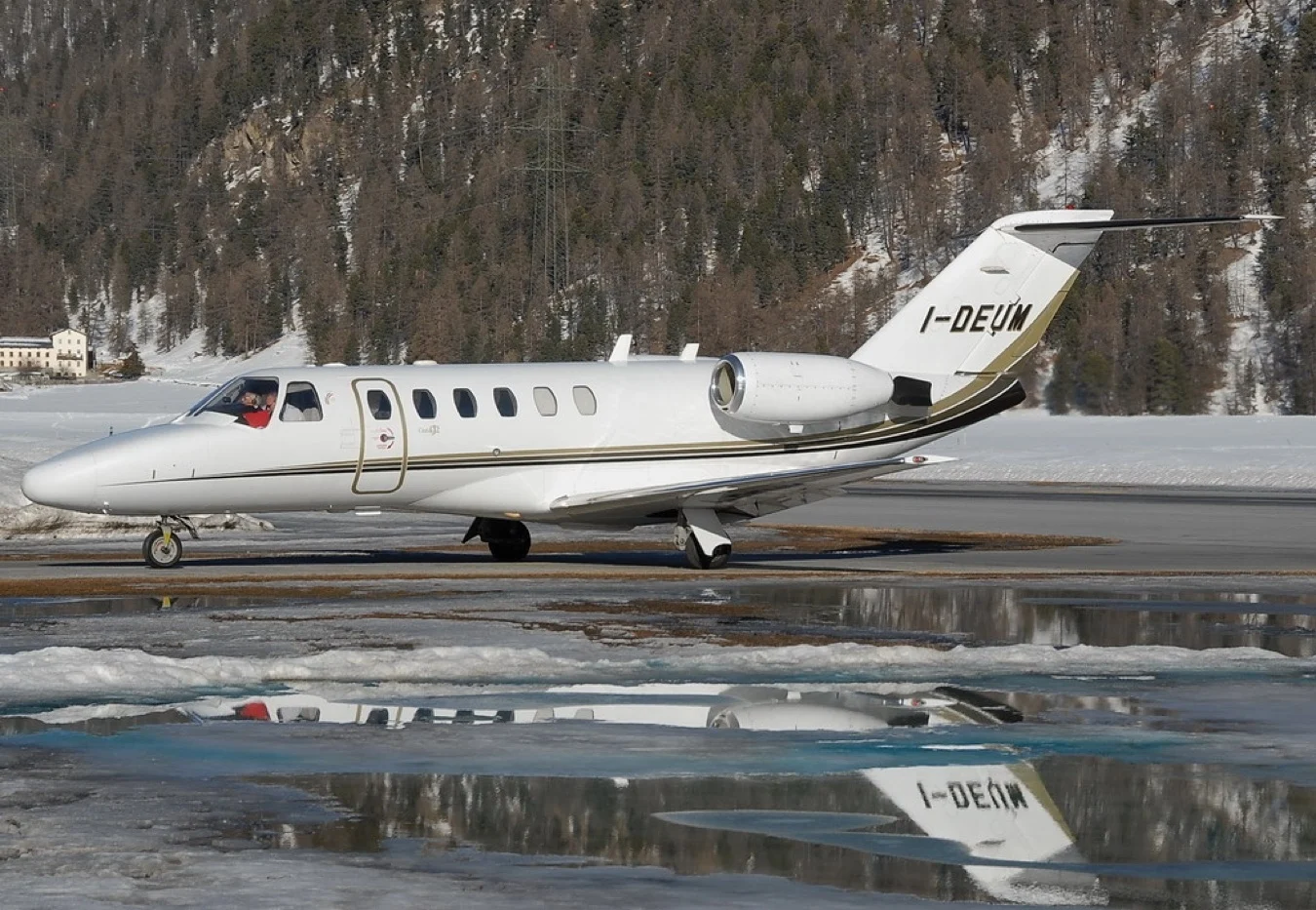
Winter Private Jet Travel in Europe
Choosing an airport for the Alps or Lapland, allowing time to reach the resort and checking which winter charges your charter quote covers.
Ski Equipment on a Private Jet: Bags, Boots and Airport Transfers
Ski equipment on a private jet needs a loading check based on packed length, weight and shape, alongside the group’s remaining luggage.
Private Jet Slots: Why Your Departure Time Can Change
Private jet slots and airport permissions constrain when a flight can operate; chartering an aircraft does not buy unrestricted departure times.